Knowledge Base
What Is the CAS Registry?
The Chemical Abstracts Service (CAS) Registry is a comprehensive database that assigns unique numerical identifiers to chemical substances. These identifiers are known as CAS Registry Numbers (CAS RN, CASN, or CAS#).
A CAS Registry Number provides a standardized way of identifying a specific substance independently of the different names that may be used for it.
CAS Registry Numbers
A CAS Registry Number can contain up to 10 digits and is divided into three sections by hyphens.
The structure is:
Up to 7 digits – 2 digits – 1 check digit
The final digit is a check digit used to verify the validity of the complete number.
For example, a CAS Registry Number may appear in the format XXXXX-XX-X.
CAS Numbers in Cosmetic Formulation
CAS numbers are commonly used when identifying cosmetic raw materials and ingredients. They can be particularly useful when an ingredient has several chemical, commercial, or commonly used names.
In cosmetic formulation and documentation, CAS numbers may appear in:
- Raw material specifications
- Safety Data Sheets (SDS)
- Technical Data Sheets (TDS)
- Cosmetic ingredient databases
- Product Information Files (PIF)
- Regulatory documentation
- Ingredient and substance identification records
A CAS number should always be checked against the specific substance and its relevant chemical form, particularly when dealing with mixtures, salts, derivatives, or substances with different grades or compositions.
Searching the CAS Registry
The CAS Registry can be searched through different online resources. A CAS number can be used together with the substance name or other identifiers to help confirm the identity of a chemical ingredient.
For cosmetic formulation work, CAS identification is normally used together with other information, such as the INCI name, chemical name, EC/EINECS number, supplier information, and product specifications, rather than as the sole identifier.
Source: https://ec.europa.eu/
What Are Water-in-Oil Emulsions?
Water-in-oil (W/O) emulsions consist of water droplets dispersed throughout a continuous oil phase. Although less common than oil-in-water emulsions, they can be desirable when a more emollient skin feel or enhanced release of certain ingredients is required.
W/O emulsions typically contain approximately 45–80% oil phase, resulting in formulations that can provide a richer and more protective sensory profile.
Emulsifier Selection
Emulsifiers with an HLB range of approximately 2.5–6 are frequently selected for W/O systems. When several emulsifiers are used, the predominant emulsifier is generally lipophilic, with a smaller amount of a hydrophilic emulsifier.
Sorbitan stearates and sorbitan oleates can be effective emulsifiers for W/O systems. Sorbitan isostearates, which have branched hydrocarbon chains, can also contribute to a more uniform particle size distribution.
Anionic emulsifiers are generally less efficient as W/O emulsion stabilisers because larger amounts of surface-active material may be required.
Emollients and Sensory Properties
Modern W/O formulations can be developed with a more elegant skin feel by selecting suitable esters, Guerbet alcohols, silicones, and other emollients.
The choice of emollient depends on several factors, including:
- Spreading behaviour on the skin
- Tackiness
- Dermal compatibility
- Polarity
- Molecular weight
- Perceived sensory elegance
Research has shown relationships between the molecular weight of emollients and the viscosity of W/O creams. Higher-molecular-weight co-emulsifiers combined with higher-molecular-weight emollients have also been associated with improved emulsion stability.
Emollients or combinations of emollients with medium polarity have demonstrated favourable stability characteristics in W/O lotion systems.
Cosmetic Applications
W/O emulsions are particularly useful for cosmetic products where a rich, emollient texture is desired. Their continuous oil phase can contribute to a distinctive application and afterfeel compared with conventional O/W emulsions.
They can therefore be considered for richer creams, protective skin-care products, and other formulations where emolliency and sensory performance are important.
Source: Handbook of Cosmetic Science and Technology - André O. Barel, Marc Paye, Howard I. Maibach

What is an Oil-in-Water (O/W) Emulsion?
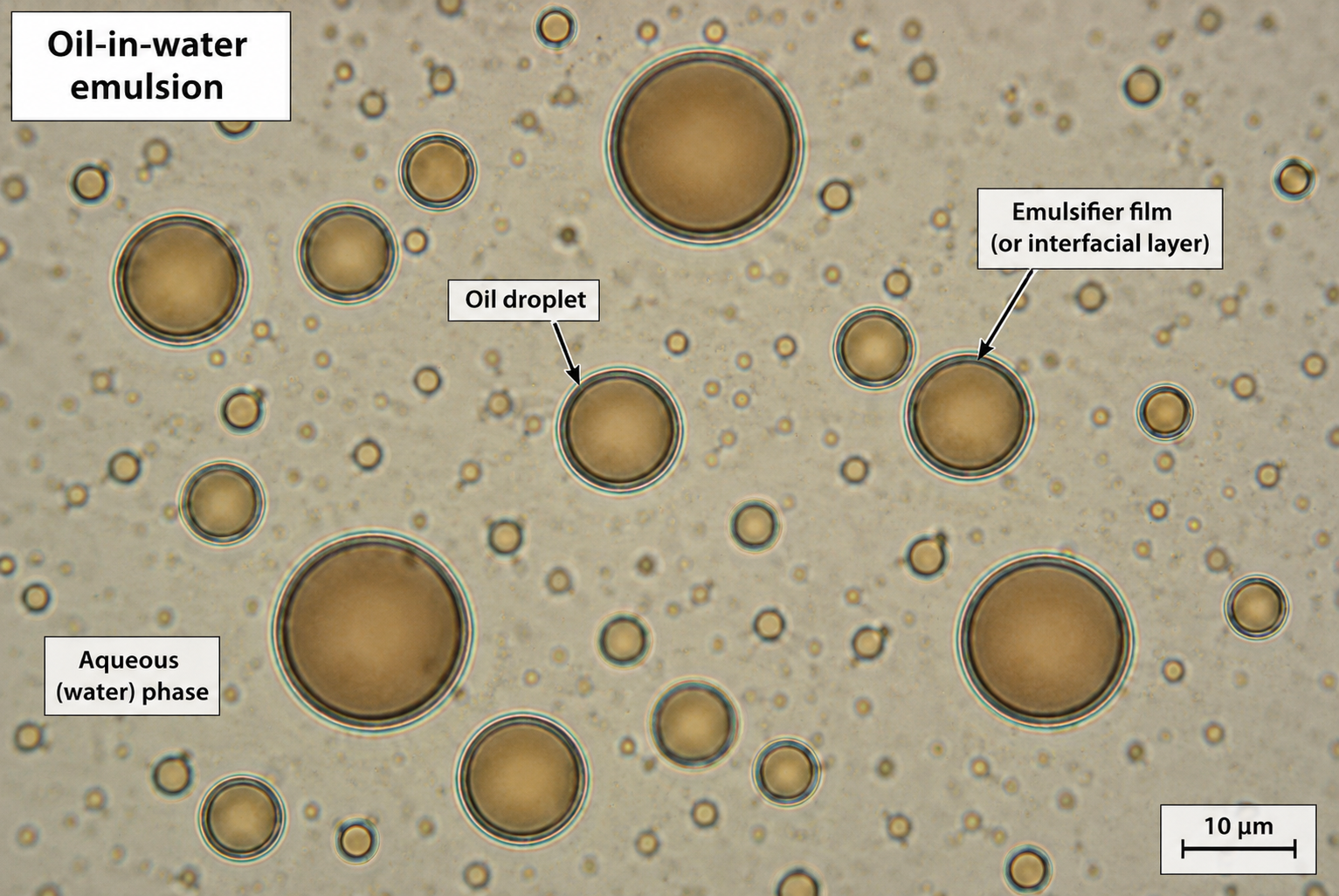
An oil-in-water (O/W) emulsion is a formulation in which small oil droplets are dispersed throughout a continuous water phase. O/W emulsions are widely used in cosmetic creams, lotions and other emulsified products because they generally provide a lighter, easily spreadable skin feel.
Typical Oil Phase
O/W emulsions can contain a wide range of oil-phase concentrations depending on the product type and desired sensory profile. Lightweight lotions may contain a relatively low oil phase, while richer creams can contain substantially higher levels.
The appropriate oil-phase concentration should be selected according to the desired texture, skin feel, viscosity and stability of the finished product.
How Are O/W Emulsions Stabilized?
The stability of an O/W emulsion depends on several factors, including emulsifier selection, droplet size, viscosity of the continuous phase, phase ratio, processing conditions and the compatibility of the formulation ingredients.
Increasing the viscosity of the water phase can help reduce the movement of dispersed oil droplets and may therefore contribute to improved physical stability.
Common Thickeners for O/W Emulsions
Water-phase viscosity can be increased using ingredients such as xanthan gum, alginates, carrageenans and cellulose derivatives.
Carbomers and other rheology modifiers are also commonly used in O/W formulations to control viscosity and contribute to physical stability when properly incorporated and neutralized.
Choosing Emulsifiers for O/W Emulsions
O/W emulsions generally require emulsifier systems that favor the formation of oil droplets within a continuous water phase. The appropriate emulsifier depends on the composition of the oil phase, desired sensory profile, formulation pH, electrolytes and other ingredients.
Commonly used O/W emulsifier systems include glyceryl stearate, polysorbates, PEG-based emulsifiers and various nonionic emulsifiers.
The emulsifier should always be selected according to the specific oil phase and overall formulation rather than based on HLB value alone.
How Much Emulsifier Should Be Used?
There is no single universal use level for an O/W emulsifier. The required concentration depends on the emulsifier system, oil-phase composition, emulsifier-to-oil ratio, processing conditions and desired stability.
For this reason, emulsifier concentration should be established during formulation development and confirmed through appropriate stability testing rather than relying on a fixed percentage.
O/W Emulsion Stability
Several factors can influence the physical stability of an O/W emulsion.
Droplet Size
Smaller and more uniform droplets can generally improve physical stability and reduce the tendency toward creaming or coalescence.
Water-Phase Viscosity
Increasing the viscosity of the continuous phase can reduce droplet movement and help slow physical separation.
Emulsifier System
The emulsifier must be compatible with the oil phase and capable of maintaining a stable interface between the oil and water phases.
Electrolytes and Ionic Ingredients
Salts and other ionic ingredients can affect the performance of certain emulsifiers and polymeric thickeners.
Temperature
Temperature changes can influence viscosity, droplet interactions and the physical and chemical stability of the formulation.
pH
Changes in pH can affect emulsifier performance, polymer viscosity and the compatibility of individual ingredients.
Processing
Homogenization, mixing intensity, temperature and the order of addition can all influence the final droplet size and stability of the emulsion.
O/W vs W/O Emulsions
The main difference between O/W and W/O emulsions is the continuous phase.
In an O/W emulsion, water is the continuous phase and oil is dispersed as droplets.
In a W/O emulsion, oil is the continuous phase and water is dispersed as droplets.
O/W emulsions generally provide a lighter and less oily sensory profile, while W/O emulsions can provide a richer and more occlusive skin feel.
Common Applications of O/W Emulsions
O/W emulsions are widely used in cosmetic products such as face creams, body lotions, moisturizers, light emulsions, cleansing products and sun care formulations.
The same basic emulsion principle can be adapted to create products ranging from lightweight lotions to rich creams by modifying the oil phase, emulsifier system, rheology modifiers and processing conditions.
Key Takeaway
Oil-in-water emulsions are versatile cosmetic systems in which oil is dispersed in a continuous water phase. Their performance and stability depend on the interaction between the emulsifier system, oil phase, water-phase rheology, processing conditions, pH and other formulation ingredients.
For commercial cosmetic formulations, the optimal emulsifier, oil-phase composition and thickening system should be determined according to the specific product requirements and confirmed through appropriate stability and compatibility testing.
Source: Handbook of Cosmetic Science and Technology – André O. Barel, Marc Paye, Howard I. Maibach.
What Is Panthenol?
Panthenol is the biologically active alcohol analogue of pantothenic acid (Vitamin B5), a member of the vitamin B-complex group. Pantothenic acid is a natural constituent of skin and hair and plays an important role in cellular metabolism as part of coenzyme A.
Because pantothenic acid itself is relatively unstable, cosmetic formulations commonly use its more stable alcohol form, panthenol. After topical application, panthenol can be converted into pantothenic acid in the skin.
Panthenol in Skin Care
Panthenol has a strong humectant character. It attracts and retains water, helping to improve the moisture content of the skin while providing a smooth, lightweight skin feel without excessive greasiness or stickiness.
It is widely used in:
- Moisturisers and creams
- Sensitive-skin products
- Baby care products
- Skin-conditioning formulations
- After-sun and soothing products
- Derma-oriented cosmetic formulations
Panthenol is generally well tolerated and is therefore suitable for formulations intended for sensitive or dry skin.
Panthenol in Hair Care
Panthenol is also widely used in hair care products. It acts as a humectant and forms a thin moisture film on the hair surface, contributing to shine and improved manageability.
Panthenol can also penetrate into the hair cuticle and increase moisture within the hair fibre. This can improve pliability, combability, and resistance to mechanical stress caused by brushing, combing, and blow-drying.
It is commonly incorporated into shampoos, conditioners, hair treatments, and styling products. Studies cited in the source literature have also reported an increase in apparent hair thickness following exposure to panthenol solutions.
Commercial Forms
The main commercial forms include D-panthenol, DL-panthenol, and ethyl panthenol. These forms are soluble in water, ethanol, and propylene glycol but are generally insoluble in fats and oils.
D-panthenol is the biologically active stereoisomer, while DL-panthenol contains both the D- and L-forms.
Ingredient Information
INCI: Panthenol
CAS: 16485-10-2; 81-13-0
EINECS/EC: 240-540-6; 201-327-3
Functions: Humectant, Skin Conditioning, Hair Conditioning
Source: Handbook of Cosmetic Science and Technology - André O. Barel, Marc Paye, Howard I. Maibach

What Are Exfoliating Agents?
Exfoliating agents, also called skin scrub agents or body polishers, are solid materials incorporated into cosmetic cleansing and exfoliating products. They may be obtained from natural sources, such as finely powdered seeds or vegetable shells, or produced synthetically, for example as small polymer beads.
When a product containing exfoliating particles is rubbed or massaged onto the skin, the particles provide mechanical abrasion that removes superficial layers of dead skin cells. This can leave the skin feeling smoother and fresher.
Natural and Synthetic Exfoliating Agents
Natural exfoliating materials can include finely ground seeds, shells, and other plant-derived particles. Synthetic particles may also be used to provide a consistent particle size and sensory profile.
The choice of exfoliating material affects the feel of the product during application and the intensity of the exfoliation. Particle characteristics should therefore be considered carefully when developing a scrub or exfoliating cleanser.
Suspending Exfoliating Particles
Exfoliating particles need to remain adequately dispersed throughout the product. Structuring polymers such as xanthan gum or carrageenan can help suspend solid particles by forming a viscoelastic network within the surfactant system.
This allows the particles to remain evenly distributed while also providing a suitable consistency for dispensing and application.
Facial and Body Exfoliation
The appropriate exfoliating agent depends on the intended area of application. Facial skin is generally more delicate than the skin of the body, so exfoliating materials for facial cleansers should be selected with particular care.
For facial products, softer materials such as soft clays or melting jojoba beads can be considered. Body scrubs can generally accommodate a wider range of particle types, depending on the desired level of mechanical exfoliation and product format.
Formulation Considerations
When developing an exfoliating product, the formulator should consider:
- Particle material and hardness
- Particle size and shape
- Desired exfoliation intensity
- Suspension and formulation stability
- Intended application area
- Skin feel during and after use
The exfoliating agent should provide the intended sensory effect without making the formulation unnecessarily harsh, particularly in products designed for facial use.
Source: Handbook of Cosmetic Science and Technology - André O. Barel, Marc Paye, Howard I. Maibach

What Are Surfactants?
Surfactants are surface-active ingredients used extensively in cosmetic formulations. Their properties allow them to influence the interaction between water, oils, skin, and other formulation components.
Different surfactant classes can provide cleansing, emulsifying, foaming, conditioning, and refatting effects. Their chemical structure and charge also have a significant influence on skin feel and product performance.
Amphoteric Surfactants
Amphoteric surfactants are often derived from amino acids, and their net electrical charge varies according to the pH of the solution. Below their isoelectric point, they become positively charged and can therefore adsorb more readily onto the skin.
The length of the alkyl chain can also influence skin feel. Some C16/C18 betaines, for example, can provide a more greasy and refatting feel, although they may negatively affect foam performance.
Silicone-modified amphoteric surfactants can combine substantivity and refatting properties with the characteristic sensory profile of silicones.
Nonionic Surfactants
Some nonionic surfactants are valued for their emollient properties and pleasant afterfeel. Examples include sucrose esters, methyl glucose esters, and sucrose ethers.
Fatty acid alkanolamides are sometimes described as refatting agents. Although they are not lipids, they can provide a greasy, slippery feel to foam and contribute to the perception of a conditioned skin surface after cleansing.
Mild Anionic Surfactants
Several mild anionic surfactants can provide good skin feel in addition to their cleansing function. Examples include:
- Sarcosinates
- Taurates
- Acylglutamates
- Isethionates
Fatty acid–protein condensate salts can also act as conditioning aids, while the incorporation of fatty acids into soap and syndet bars can contribute to a creamier lather and improved skin feel.
Skin Feel and Afterfeel
The sensory properties of surfactants are not limited to their performance during cleansing. Some mild anionic and nonionic surfactants can provide a pleasant afterfeel, while their feel in aqueous solution may be perceived as rough or dragging.
The overall surfactant system therefore has an important influence on the sensory profile of a finished cosmetic product.
References
Handbook of Cosmetic Science and Technology – André O. Barel, Marc Paye, Howard I. Maibach.

What Are Polymers?
Polymers are large molecules composed of repeating structural units. In cosmetic formulations, polymeric materials can interact with both skin proteins and skin lipids, influencing how an ingredient deposits on and remains on the skin surface.
The interaction between polymers and the skin depends on several important characteristics.
Factors Affecting Polymer–Skin Interaction
Positive Charge Density
The more cationic a polymer is, the stronger its potential interaction with the negatively charged surface of the skin. This can improve the polymer's ability to deposit on the skin.
Hydrophobicity
The presence of hydrophobic groups on the polymer backbone can promote van der Waals interactions with hydrophobic regions of keratin. This can contribute to adhesion and deposition on the skin surface.
Molecular Weight
Molecular weight has an important influence on polymer substantivity. Generally, higher-molecular-weight polymers have greater substantivity and stronger film-forming properties.
Very low-molecular-weight polymers, however, can more easily enter surface irregularities and adsorb into the superficial stratum corneum.
Interaction with Surfactants
The surfactants present in a finished cosmetic product can influence polymer deposition. Polymers may interact with surfactants through electrostatic or hydrophobic interactions.
Competition between polymers and surfactants for anchoring sites on the skin can also occur. This may reduce the adsorption and deposition of the polymer on the skin surface.
Cosmetic Applications
Because of these properties, polymers are important functional ingredients in many cosmetic formulations. Their ability to form films and interact with the skin can be used to influence product feel, substantivity, conditioning, and skin deposition.
References
Handbook of Cosmetic Science and Technology – André O. Barel, Marc Paye, Howard I. Maibach.

What Is Lecithin?
Lecithin is a natural mixture of polar and neutral lipids. The term is also commonly used for phosphatidylcholine, one of its principal phospholipids.
The main vegetable sources used in personal care products are soybean and maize, while egg yolk is the main animal-derived source used in cosmetics and toiletries. The composition of lecithin varies according to its source, particularly in the proportion of polar lipids and the fatty acid profile.
Raw lecithin obtained as a by-product of soybean oil extraction typically contains around 60–70% polar lipids, mainly phospholipids such as phosphatidylcholine and glycolipids, together with approximately 25–35% soybean oil.
Cosmetic Applications
Lecithin is valued for its emollient, refatting, and moisturising properties. Its performance is closely related to its phospholipid content.
In cosmetic formulations, lecithin can:
- Soften and condition the skin
- Support refatting of the skin
- Improve moisturising properties
- Provide a non-greasy and long-lasting skin feel
- Improve the creaminess and slipperiness of foam
- Enhance the richness and overall quality of cleansing products
Purified and modified lecithin derivatives are also available for easier incorporation into liquid and solid cleansing formulations. Some phospholipid-based systems can be used to formulate clear products.
Ingredient Information
INCI: Lecithin
Main Sources: Soybean, maize, egg yolk
Main Components: Phospholipids, phosphatidylcholine, glycolipids
Functions: Emollient, Refatting, Moisturising, Skin Conditioning
References
Handbook of Cosmetic Science and Technology – André O. Barel, Marc Paye, Howard I. Maibach.

What Is Lanolin?
Lanolin is extracted from sheep wool grease. It is a complex mixture consisting mainly of esters of high-molecular-weight lanolin alcohols and lanolin acids. Free lanolin alcohols, acids, and lanolin hydrocarbons are present in smaller quantities.
Lanolin and its derivatives provide formulators with a broad range of emollient and conditioning properties.
Cosmetic Applications
Lanolin alcohols and lanolin oil are traditionally used as superfatting agents in soaps. Lanolin derivatives can also be incorporated into skin cleansers and other personal care products to provide emolliency and moisturisation.
Depending on their chemical modification, lanolin derivatives can be used as:
- Emollients
- Skin conditioners
- Superfatting agents
- Refatting agents
- Foam-stabilising agents
Lanolin Derivatives
Ethoxylation of lanolin or its derivatives produces more hydrophilic and water-soluble compounds. Moderately to highly ethoxylated lanolin derivatives can provide good emolliency and moisturisation while having limited effects on the foam profile of liquid cleansing products.
For example, 75 mol ethoxylated lanolin can be used as a skin conditioner in soaps, liquid body cleansers, and bubble baths.
Propoxylated lanolin alcohols are more lipophilic emollients and can be used in soap bars and synthetic-surfactant-based cleansing products. Alkoxylated derivatives can also function as refatting and foam-stabilising agents.
Ingredient Information
INCI: Lanolin
Source: Sheep wool grease
Functions: Emollient, Skin Conditioning, Superfatting, Refatting, Foam Stabilising
References
Handbook of Cosmetic Science and Technology – André O. Barel, Marc Paye, Howard I. Maibach.

What Are Non-Newtonian Fluids?
Unlike Newtonian fluids, non-Newtonian fluids have viscosities that depend on the applied shear rate. They may also exhibit elastic stresses when subjected to high shear rates.
This behaviour is particularly important in cosmetic formulations because products can experience very different shear conditions during storage, pouring, pumping, rubbing, and spraying.
Cosmetic Applications
At low shear rates, close to resting conditions, non-Newtonian fluids generally exhibit relatively high viscosity. This is known as zero-shear viscosity and is highly influenced by the molecular weight and concentration of rheological additives.
A sufficiently high zero-shear viscosity can help control forces associated with sedimentation and levelling, contributing to formulation stability.
At moderate shear rates, viscosity decreases. This makes products easier to pour and pump, which is particularly useful for creams, gels, emulsions, and other viscous cosmetic products.
Shear-Thinning Behaviour
At high shear rates, a second Newtonian plateau may be reached, characterised by the so-called infinite-shear viscosity. The shear conditions in this region can be similar to those experienced during rubbing and spraying.
The lower viscosity at high shear reduces resistance during application and can contribute to a smooth sensory feel when the product is spread over the skin.
Understanding non-Newtonian behaviour therefore helps formulators balance stability at rest with easy dispensing and pleasant application.
References
Handbook of Cosmetic Science and Technology – André O. Barel, Marc Paye, Howard I. Maibach.

What Are Newtonian Fluids?
Newtonian fluids are fluids whose viscosity remains essentially constant regardless of the applied shear rate. Their flow behaviour can therefore be described relatively simply compared with non-Newtonian cosmetic systems.
In cosmetic formulations, the viscosity of a fluid can be modified by adding small amounts of particulate or polymeric materials. For non-interacting, buoyant particles, the resulting dispersion viscosity can be predicted using the Einstein relation.
Cosmetic Applications
Rheology-modifying materials can be selected when a formulation needs to maintain a relatively smooth or fluid-like consistency.
Examples of materials that may modify the viscosity of these systems include:
- Silica gels
- Fumed silica
- Carbon black
- Titanium dioxide
- Aluminium-magnesium stearates
These materials can be effective at relatively low concentrations when the particles do not strongly interact with one another.
Low-molecular-weight polymers may also be preferred when a smooth, fluid-like formulation is desired.
Newtonian Behaviour in Cosmetic Formulation
Understanding whether a formulation behaves as a Newtonian or non-Newtonian fluid is important when designing its texture, processing characteristics, and application properties. Newtonian systems provide relatively predictable flow behaviour, while many creams, gels, emulsions, and suspensions exhibit more complex rheological behaviour.
References
Handbook of Cosmetic Science and Technology – André O. Barel, Marc Paye, Howard I. Maibach.

What Are Thickeners?
Thickeners are rheological additives used to control the flow behaviour and consistency of cosmetic and personal care products. Materials such as clays, plant exudates, and natural polymers have been used for this purpose for centuries.
In cosmetic formulations, thickeners can increase viscosity, suspend dispersed ingredients, and improve the stability of emulsions and dispersions under different temperature and shear conditions.
Cosmetic Applications
Water and oils form the base fluids of many cosmetic and personal care products. Their flow behaviour can be modified by incorporating appropriate rheological additives.
Thickeners can be used to:
- Increase the viscosity of a formulation
- Improve product texture and consistency
- Keep dispersed particles suspended
- Improve emulsion stability
- Control how a product flows during processing and application
The choice of thickener depends on the formulation system, desired texture, and required rheological behaviour.
Rheology and Flow Behaviour
Cosmetic formulations may behave as either Newtonian or non-Newtonian fluids.
Newtonian fluids have a viscosity that remains essentially independent of the applied rate of deformation. Non-Newtonian fluids, by contrast, have viscosities that depend on the rate of deformation and may also exhibit properties such as elasticity, yield stress, and thixotropy.
Thickeners are therefore not used only to make a product "thicker"; they can be selected to achieve a specific flow profile and application behaviour.
References
Handbook of Cosmetic Science and Technology – André O. Barel, Marc Paye, Howard I. Maibach.

What Is Annatto?
Annatto is a natural colouring material obtained from Bixa orellana, commonly known as the lipstick tree or achiote tree.
The colour is derived primarily from the seeds of the plant. Annatto can produce colours ranging from yellow to deep orange, depending on the form and concentration used.
The principal colouring compounds associated with annatto include bixin and norbixin.
Cosmetic Applications
Annatto is primarily relevant to cosmetic formulations where a naturally derived yellow, orange, or reddish-orange colour is desired.
Its potential applications include:
- Colour cosmetics
- Skin care products
- Decorative cosmetic formulations
- Products requiring a natural botanical colour
Annatto is also widely used as a food colourant, particularly for colouring dairy products such as butter and cheese, as well as margarine and edible oils.
Botanical Source
The annatto-producing plant, Bixa orellana, is cultivated commercially for its natural colouring compounds. The seeds are processed to obtain the colourant, which has made annatto an important natural alternative to some synthetic colourants.
Ingredient Information
INCI: Annatto
Botanical Source: Bixa orellana
Common Name: Achiote, Lipstick Tree
Colour: Yellow to deep orange
Function: Colourant

Source: Dweck, Anthony. Handbook of Formulating Natural Cosmetics (Dweck Books 1) (p. 208).

What Are Chelating Agents?
Chelating agents are ingredients that bind metal ions and form stable complexes with them. In cosmetic formulations, they can help control trace amounts of metals that may otherwise affect product stability or preservative performance.
Examples include phytic acid, which can be obtained from rice bran, and sodium gluconate, a naturally produced ingredient obtained through the fermentation of glucose.
Cosmetic Applications
Chelating agents can be incorporated into cosmetic formulations to support the effectiveness of preservation systems and improve formulation stability.
Phytic acid is one naturally derived option that can be used to enhance the activity of natural preservatives.
Sodium gluconate is the sodium salt of gluconic acid. It is a white crystalline powder that is highly soluble in water and can function particularly effectively in alkaline and concentrated alkaline solutions.
It forms stable complexes with metal ions including:
- Calcium
- Iron
- Copper
- Aluminium
- Other heavy metals
Sodium gluconate is also resistant to oxidation and reduction in aqueous solutions, including at elevated temperatures.
Chelating Agents and Preservation
Metal ions can influence chemical reactions and may reduce the stability of cosmetic formulations. By binding these ions, chelating agents can support the overall stability of a product and enhance the activity of certain preservative systems.
The original source also notes that very high concentrations of chelating agents have been used for preservative purposes themselves.
Ingredient Information
Ingredient Type: Chelating agents
Examples: Phytic Acid, Sodium Gluconate
Functions: Chelating, formulation stabilisation, preservation support
References
Dweck, Anthony. Handbook of Formulating Natural Cosmetics (Dweck Books 1) (pp. 83-84).
What Are Saponins?
Saponins are glycoside compounds often referred to as natural detergents because of their ability to form foaming solutions in water.
Most naturally occurring saponins are of the triterpenoidal type, while steroidal saponins represent a smaller class. The non-sugar portion of the molecule is called the aglycone, or sapogenin.
Saponins are generally divided into three main classes:
- Triterpene glycosides
- Steroid glycosides
- Steroid alkaloid glycosides
Cosmetic Applications
The foaming properties of saponins result from the combination of a non-polar sapogenin with a water-soluble sugar side chain. This structure allows saponins to interact with water and contribute to foam formation.
Their natural cleansing and foaming properties have led to their traditional use in personal care products, including shampoos and other cleansing preparations. Saponins have also been used as the foaming agents in toothpaste.
Plants traditionally known for their high saponin content include:
- Yucca (Yucca schidigera)
- Soapwort (Saponaria officinalis)
- Soapbark (Quillaia saponaria)
- Soaproot (Chlorogalum pomeridianum)
- Soapnut (Sapindus spp.)
These plants can provide naturally derived cleansing and foaming materials for cosmetic formulations.
Ingredient Information
Ingredient Type: Glycoside compounds
Main Classes: Triterpene glycosides, steroid glycosides, steroid alkaloid glycosides
Cosmetic Functions: Foaming, Cleansing
References
Dweck, Anthony. Handbook of Formulating Natural Cosmetics (Dweck Books 1).

What Is Prunus Armeniaca (Apricot) Seed Powder?
Prunus Armeniaca (Apricot) Seed Powder is produced by drying and grinding the kernels of apricots into a fine powder.
Its physical properties make it suitable for use as a mechanical exfoliant. The particles can help remove accumulated dead cells from the outermost layer of the skin.
Cosmetic Applications
Apricot seed powder is primarily used in exfoliating skin care products. The natural shedding of skin cells continuously removes cells from the living epidermis to the outer stratum corneum. However, the outermost layer can sometimes become coarse and flaky, affecting the appearance and feel of the skin.
When appropriately formulated, apricot seed powder can provide gentle mechanical exfoliation, helping to leave the skin feeling smoother and softer.
It can be incorporated into:
- Facial scrubs
- Body scrubs
- Exfoliating cleansers
- Other mechanical exfoliation products
The particle size and formulation should be selected carefully to provide the intended exfoliating effect without excessive abrasion.
Ingredient Information
INCI: Prunus Armeniaca (Apricot) Seed Powder
Botanical Source: Prunus armeniaca
Plant Part: Seed/kernel
Function: Exfoliant
References
Dweck, Anthony. Handbook of Natural Ingredients (Dweck Books 4) . Dweck Data.
What Is Cucumis Sativus (Cucumber) Seed Oil?
Cucumis Sativus Seed Oil is the fixed oil expressed from the seeds of cucumber, Cucumis sativus L., from the Cucurbitaceae family.
The oil contains a high proportion of unsaturated fatty acids, particularly linoleic acid (64%) and oleic acid (17%). It also contains approximately 600–700 ppm tocopherols and 4,000–5,000 ppm phytosterols.
Cosmetic Applications
The composition of cucumber seed oil makes it particularly suitable for skin care formulations. Its high phytosterol content is associated with several properties relevant to maintaining healthy-looking skin.
Phytosterols can help support the skin's lipid barrier and moisture balance, contributing to a smoother skin surface and improved elasticity. They are also reported to stimulate skin cells and support the regeneration of healthy skin cells.
Cucumber seed oil can therefore be used in:
- Facial creams and lotions
- Moisturising products
- Skin-conditioning formulations
- Products targeting dry or rough skin
- Anti-ageing skin care formulations
Composition
The fatty acid profile of cucumber seed oil includes approximately:
- Linoleic acid (C18:2): 64%
- Oleic acid (C18:1): 17%
- Palmitic acid (C16:0): 11%
- Stearic acid (C18:0): 7.5%
It has a specific gravity of approximately 0.922, a saponification value of 185, and an iodine value of 125.
Safety
Botanical and botanically derived ingredients used in cosmetics are generally considered mild and have a long history of use. The safety of the finished cosmetic product must nevertheless be substantiated for its intended application.
Depending on the formulation and use, safety assessment may include consideration of skin and eye irritation, allergenicity, phototoxicity, photoallergenicity, and mutagenicity.
Ingredient Information
INCI: Cucumis Sativus (Cucumber) Seed Oil
Botanical Source: Cucumis sativus L.
Plant Family: Cucurbitaceae
Plant Part: Seed
Functions: Skin Conditioning, Emollient
References
Dweck, Anthony. Handbook of Natural Ingredients (Dweck Books 4) . Dweck Data.
What Is Dextrin?
Dextrin is a group of water-soluble polysaccharides produced from starch. White dextrins are prepared by heating dry starch in the presence of an acid, generally at temperatures below 150°C.
Dextrins are formed through the partial breakdown of starch and can vary in their composition and properties depending on the production process.
Cosmetic Applications
Because of their starch-derived nature and water solubility, dextrins can be used in cosmetic and personal care formulations where texture modification, binding, and film formation are required.
Their properties make them relevant to formulations such as:
- Skin care products
- Hair care products
- Creams and lotions
- Powder-based cosmetics
- Products requiring binding or film-forming properties
The specific functionality depends on the type and grade of dextrin used.
Ingredient Information
INCI: Dextrin
Origin: Starch-derived polysaccharide
References
Dweck, Anthony. Handbook of Natural Ingredients (Dweck Books 4) . Dweck Data.

What Is Geraniol?
Geraniol is a sweet, rose-like fragrancing agent that occurs naturally in a variety of plants and essential oils. It is found in fruits such as apples, cherries, and grapefruit, as well as in bay leaves, citronella oil, ginger, lavender, and the essential oils of geranium and lemon. It can also be produced synthetically.
Cosmetic Applications
Geraniol is primarily used as a fragrance ingredient and is incorporated into a wide range of cosmetic and personal care products, including:
- Perfumes and after-shaves
- Bath and body care products
- Depilatories
- Hair care products
- Lipsticks
- Suncare products
It is particularly useful in fragrance compositions with rose and orange blossom notes.
Fragrance Allergen and Safety
Geraniol is one of the declared fragrance allergens that may be present in essential oils and fragrance materials.
Its safety has been evaluated by the Research Institute for Fragrance Materials Expert Panel (REXPAN), and an International Fragrance Association (IFRA) Standard restricts its use in fragrances because of its potential to cause sensitisation.
The Cosmetic Ingredient Review (CIR) generally defers the assessment of individual fragrance ingredients to the IFRA programme unless the ingredient has significant uses beyond fragrance.
Ingredient Information
INCI: Geraniol
Function: Fragrance
References
Dweck, Anthony. Handbook of Natural Ingredients (Dweck Books 4) . Dweck Data.

What Is Ginkgo Biloba?
Ginkgo Biloba is derived from Ginkgo biloba, a tree with a long history of use in traditional Chinese herbal medicine. The species is notable for its exceptional longevity, with individual trees reported to live for up to 1,000 years.
Ginkgo has traditionally been associated with age-related conditions and circulatory health. In cosmetics, ginkgo extracts have been attributed with tonic, stimulant, and vasodilator effects.
Cosmetic Applications
Ginkgo Biloba extracts are primarily used in cosmetic formulations where their tonic and stimulating properties are desired. They may be incorporated into:
- Skin care products
- Toning formulations
- Products targeting the appearance of mature skin
- Cosmetic formulations designed to support skin circulation
The Council of Europe lists tonic, stimulant, and vasodilator effects among the cosmetic effects attributed to Ginkgo Biloba extracts.
Botanical Background
Ginkgo Biloba has a particularly distinctive botanical history. The species survived the Ice Age in China, where it was cultivated as a sacred tree. Other members of its botanical order are known primarily from fossil records, making Ginkgo biloba a unique surviving representative.
Ingredient Information
Botanical Source: Ginkgo biloba
Part Used: Ginkgo extract
Cosmetic Functions: Tonic, Stimulant, Vasodilator
References
Dweck, Anthony. Handbook of Natural Ingredients (Dweck Books 4) . Dweck Data.
What Is Kojic Acid?
Kojic Acid, chemically known as 5-hydroxy-2-hydroxymethyl-4-pyrone, is a chelating agent produced by several species of fungi, particularly Aspergillus oryzae. It is also a by-product of the fermentation of malted rice during sake production.
In cosmetics, Kojic Acid has traditionally been used as a skin-whitening and depigmenting ingredient. It is also described as having antioxidant, antibacterial, and antifungal properties.
Cosmetic Applications
Kojic Acid is primarily used in skin care products formulated to improve the appearance of uneven pigmentation and dark spots.
Its cosmetic use is based largely on its ability to interact with tyrosinase, an enzyme involved in melanin production. Kojic Acid can chelate copper at the active site of tyrosinase, thereby inhibiting its activity.
It can therefore be found in formulations such as:
- Pigmentation and dark-spot treatments
- Skin-brightening creams and serums
- Facial skin care products
- Products formulated for uneven skin tone
The source notes that visible effects may take several weeks or months to develop.
Safety Considerations
Kojic Acid requires particular attention during formulation because of its potential to cause skin sensitisation. The original source reports that human sensitisation has been observed.
Ingredient Information
INCI: Kojic Acid
Chemical Name: 5-Hydroxy-2-hydroxymethyl-4-pyrone
Function: Antioxidant
References
Dweck, Anthony. Handbook of Natural Ingredients (Dweck Books 4) . Dweck Data.

What Is Lavandula Angustifolia Water?
Lavandula Angustifolia Water is an aqueous solution of the steam distillate obtained from lavender (Lavandula angustifolia). It is produced from the flower buds of the plant, which belongs to the Labiatae family.
The material is obtained as the condensate produced during the distillation of lavender essential oil. It contains water-soluble constituents together with a small amount of essential oil and has the characteristic fresh, clean scent of lavender.
Cosmetic Applications
Lavandula Angustifolia Water is particularly suitable for skin care formulations where a gentle botanical water and lavender sensory profile are desired.
It can be used:
- As a facial tonic or toner
- In skin-soothing formulations
- In blends intended for irritated-looking skin
- In general skin care products
- In products where a fresh lavender scent is desirable
Its traditional use as a gentle tonic and its soothing properties have contributed to the long-standing use of lavender-derived materials in personal care.
Skin Care Properties
Lavender water is traditionally associated with soothing and antiseptic properties, making it suitable for cosmetic products formulated for sensitive or irritated-looking skin.
Ingredient Information
INCI: Lavandula Angustifolia Water
Botanical Source: Lavandula angustifolia
Plant Part: Flower buds
Function: Skin Conditioning
References
Dweck, Anthony. Handbook of Natural Ingredients (Dweck Books 4) . Dweck Data.

What Is Rosmarinus Officinalis Water?
Rosmarinus Officinalis Water is an aqueous solution of the steam distillate obtained from rosemary, Rosmarinus officinalis L., a member of the Lamiaceae family.
It is one of several cosmetic ingredients derived from rosemary, alongside rosemary extracts, flower extracts, leaf extracts, leaf water, leaf oil, and other plant-derived materials.
Cosmetic Applications
Rosemary-derived ingredients are used in a wide variety of cosmetic and personal care products. Rosmarinus Officinalis Water can be incorporated into formulations such as:
- Shampoos and hair conditioners
- Skin care products
- Cleansing products
- Shaving products
- Bath products
- Makeup
- Suntan products
- Personal cleanliness products
- Hair treatments and permanent-wave products
As a botanical water, it can also contribute to the sensory and botanical profile of a formulation.
Safety Considerations
Rosemary and rosemary-derived ingredients have a long history of use. Depending on the formulation and intended use, safety assessment may include consideration of skin and eye irritation, allergenicity, phototoxicity, photoallergenicity, and mutagenicity.
Ingredient Information
INCI: Rosmarinus Officinalis Water
Botanical Source: Rosmarinus officinalis L.
Plant Family: Lamiaceae
References
Dweck, Anthony. Handbook of Natural Ingredients (Dweck Books 4) . Dweck Data.

What Is Zeolite?
Zeolites are crystalline aluminosilicates composed primarily of silica (SiO₂) and alumina (Al₂O₃), together with varying proportions of metallic oxides.
They can be produced synthetically through hydrothermal treatment of aluminosilicate materials or obtained from naturally occurring mineral sources. Zeolites may also undergo partial ion exchange to introduce different cations into their structure.
Specific zeolites are identified by designations related to their crystal structure and predominant cation, such as KA, CaX, and NaY.
Cosmetic Applications
Zeolites have properties that make them useful in cosmetic and personal care formulations. They have a high heat of adsorption and can hydrate and dehydrate while maintaining their structural stability.
Their ability to interact with and retain moisture contributes to their use in formulations where adsorption and moisture management are desirable.
Safety and Handling
The safety of zeolite ingredients has been assessed by the Cosmetic Ingredient Review (CIR) Expert Panel.
Zeolites require careful handling because their hydration process can be exothermic, meaning that heat may be released when a dehydrated zeolite becomes hydrated. Natural zeolites can therefore act as a self-heating material under certain conditions.
Extreme care must be used when handling zeolites, particularly in their dehydrated form and when they come into contact with water.
Ingredient Information
INCI: Zeolite
Composition: Crystalline aluminosilicates containing silica (SiO₂), alumina (Al₂O₃), and metallic oxides.
Functions: Adsorbent, moisture management
References
Dweck, Anthony. Handbook of Natural Ingredients (Dweck Books 4). Dweck Data.

What Is Xanthan Gum?
Xanthan Gum is a high-molecular-weight natural carbohydrate, more specifically a polysaccharide, produced through a fermentation process. It is also sometimes referred to as corn sugar gum.
It is listed as an ingredient in the British Pharmacopoeia and is also widely used in food products. In cosmetic formulations, Xanthan Gum is valued for its ability to modify viscosity and texture while providing a distinctive lubricious feel.
Cosmetic Applications
Xanthan Gum is used to modify the texture and consistency of a wide range of personal care products. It can also help stabilise formulations against separation.
Its applications include:
- Skin care products
- Creams and lotions
- Makeup products
- Toothpaste
- Suspensions
- Oil-in-water emulsions
- Foaming products
Viscosity and Stabilisation
Xanthan Gum produces relatively high viscosity at low shear rates. This helps keep particles suspended and reduces the tendency of oil droplets to coalesce in emulsions.
One of its useful formulation properties is its shear-thinning behaviour. When force is applied, such as during pouring, squeezing, or spreading, the viscosity decreases, making the product easier to dispense and apply.
Once the applied force is removed, the solution rapidly regains much of its initial viscosity. This property contributes to both formulation stability and desirable application characteristics.
Ingredient Information
INCI: Xanthan Gum
Function: Viscosity Controlling, Emulsion Stabilising, Suspending
References
Dweck, Anthony. Handbook of Natural Ingredients (Dweck Books 4). Dweck Data.
What Is Vitis Vinifera (Grape) Seed Extract?
Vitis Vinifera (Grape) Seed Extract is derived from the small seeds of red grapes and, in some preparations, may also include material from the grape skins. Grapes used for the extract are the same fruits commonly processed for wine production.
Grape seed extract is particularly rich in flavonoids and other phytochemicals with antioxidant properties. Its principal active constituents include proanthocyanidins, which contribute to its cosmetic value.
Cosmetic Uses in Skin Care
Grape seed extract is primarily used in skin care formulations for its skin-protecting properties. Its antioxidant-rich composition makes it suitable for products formulated to help protect the skin from oxidative stress caused by free radicals.
It can be incorporated into a variety of cosmetic products, including:
- Facial creams and lotions
- Serums
- Anti-ageing skin care products
- Antioxidant formulations
- Products designed to support skin protection and conditioning
The extract is particularly relevant to formulations focused on maintaining healthy-looking skin and protecting it from environmental stressors.
Skin-Protecting Properties
The cosmetic benefits of grape seed extract are largely associated with its high concentration of proanthocyanidins and other flavonoids. These compounds have antioxidant activity and are therefore commonly used in cosmetic formulations designed around skin protection.
Ingredient Information
INCI: Vitis Vinifera (Grape) Seed Extract
CAS: 84929-27-1
EINECS/EC: 284-511-6
Function: Skin Protecting
References
Dweck, Anthony. Handbook of Natural Ingredients (Dweck Books 4). Dweck Data.
What Is Stearic Acid?
Stearic Acid is a naturally occurring fatty acid found in both animal and plant sources. In cosmetic formulations, vegetable-derived Stearic Acid is commonly used.
It forms the basis of many lotions and emulsions and can contribute to the consistency and stability of the formulation. It also helps protect the skin against moisture loss.
Cosmetic Applications
Stearic Acid is widely used in cosmetic formulations for several functions, including:
- Emulsifying
- Emulsion stabilising
- Cleansing
- Refatting
- Skin conditioning
Stearic Acid can also react with triethanolamine or sodium hydroxide to form soap in situ. This can help stabilise an emulsion by supporting the formation of a structured system that reduces separation of the oil and water phases.
Safety
The safety of Stearic Acid, together with Lauric Acid, Myristic Acid, Oleic Acid, and Palmitic Acid, has been assessed by the Cosmetic Ingredient Review (CIR) Expert Panel. The panel concluded that these ingredients are safe for use in cosmetic products.
Stearic Acid is also included by the U.S. Food and Drug Administration (FDA) among direct food additives considered Generally Recognized As Safe (GRAS).
Ingredient Information
INCI Name: Stearic Acid
CAS Number: 57-11-4
EINECS/EC Number: 200-313-4
Functions: Emulsifying, Emulsion Stabilising, Refatting, Cleansing
References
Dweck, Anthony. Handbook of Natural Ingredients (Dweck Books 4). Dweck Data.

What Is Rosa Damascena Flower Extract?
Rosa Damascena Flower Extract is obtained from the flowers of the Damask Rose (Rosa damascena), a member of the Rosaceae family. The plant is also known as the Rose of Castile and is traditionally associated with the production of rose water, rose oil, and rose extracts.
Damask rose flowers have been used in cosmetics, lotions, and perfumes for centuries. The flowers can also provide a subtle natural colour to certain emollient formulations.
Cosmetic Applications
Rosa Damascena Flower Extract is used in cosmetic formulations for its skin-conditioning and sensory properties, particularly in products designed to support a smooth, youthful-looking complexion.
It is also valued for its characteristic rose fragrance and can be incorporated into products where a botanical rose profile is desired. Damask rose-derived ingredients are commonly associated with:
- Skin care products
- Lotions and creams
- Emollient formulations
- Fragrance products
- Rose water preparations
Ingredient Information
INCI Name: Rosa Damascena Flower Extract
References
Dweck, Anthony. Handbook of Natural Ingredients (Dweck Books 4). Dweck Data.