Knowledge Base
Prunus Armeniaca (Apricot) Seed Powder. The kernels from apricots are dried and ground to produce a smooth, soft but gently persuasive powder that can be used to gently slough away dead skin cells. The passage of skin cells from the living epidermis to the top layer of dead stratum corneum is a natural process, and the skin naturally loses millions of dead skin cells each day (they are the major component of dust in the bedroom!). However, this uppermost layer of the skin is often quite coarse and flaky and can spoil the appearance of the complexion, The use of a gentle exfoliant will restore smoothness and softness to the skin, without causing any damage to underlying tissue. The safety of Prunus Amygdalus Dulcis (Sweet Almond) Oil and Prunus Amygdalus Dulcis (Sweet Almond) Seed Meal has been assessed by the Cosmetic Ingredient Review (CIR) Expert Panel. The CIR Expert Panel evaluated scientific data and concluded that Prunus Amygdalus Dulcis (Sweet Almond) Oil and Prunus Amygdalus Dulcis (Sweet Almond) Seed Meal were safe for topical application to humans in the present practices of use and concentration. In 2002, as part of the scheduled re-evaluation of ingredients, the CIR Expert Panel considered available new data on Amygdalus Dulcis (Sweet Almond) Oil and Prunus Amygdalus Dulcis (Sweet Almond) Seed Meal and reaffirmed the above conclusion.
Source: Dweck, Anthony. Handbook of Natural Ingredients (Dweck Books 4) . Dweck Data.

Pyrus Malus Seed Oil is the oil expressed from the seeds of thee Apple, Pyrus malus L., Rosaceae. Traditional use: They are a good first aid. Use them raw as a poultice, or bake them and extract the pulp. Use this pulp on the eyes to relieve any kind of strain or inflammation. Over-ripe apples are used in some parts of England to relieve rheumatic and weak eyes. Apple can be used as a poultice for strains. Apple cider vinegar is an excellent cosmetic aid and can be mixed with rosewater for a daily restorative face splash. Pyrus malus is the scientific name for the apple. Apple-derived ingredients (Pyrus Malus (Apple) Fiber, Pyrus Malus (Apple) Flower Extract, Pyrus Malus (Apple) Fruit, Pyrus Malus (Apple) Fruit Extract, Pyrus Malus (Apple) Fruit Water, Pyrus Malus (Apple) Fruit Juice, Pyrus Malus (Apple) Leaf Extract, Pyrus Malus (Apple) Oil, Pyrus Malus (Apple) Pectin Extract, Pyrus Malus (Apple) Peel Extract, Pyrus Malus (Apple) Peel Powder, Pyrus Malus (Apple) Peel Wax, Pyrus Malus (Apple) Root Extract, Pyrus Malus (Apple) Seed Extract, Pyrus Malus (Apple) Seed Oil, Pyrus Malus (Apple) Stem Extract) are obtained from the fruit, leaf, stem, root or flower of the plant Pyrus malus. In cosmetics and personal care products, the ingredients derived from Pyrus malus are used in the formulation of a wide variety of products including hair conditioners, hand and body lotions, and shampoos. Apples, the fruit of the plant from which these ingredients are derived, are listed by the Food and Drug Administration (FDA) among the 20 most commonly consumed fruits. The FDA includes pectin, including pectin derived from apples, on its list of substances considered Generally Recognized as Safe (GRAS) as direct food substances. Botanical and botanically derived ingredients used in the formulation of cosmetics are generally mild and safe. Prior to marketing the finished cosmetic product, the safety of each ingredient must be substantiated in accordance with 21 CFR 740.10. Safety substantiation of cosmetic ingredients may include tests for ocular and skin irritation as well as allergenicity, phototoxicity, photoallergenicity and mutagenicity, depending on the application or intended use. There is a considerable body of information about the safety of botanical ingredients and a well-established history of use. These resources are consulted to ensure the safety of these materials as they are used in cosmetics.Apple seed oil is extracted from the seed Kernels of apple, by the cold press and filteration process. It is most stable natural oil and it is found to be good source of oleic acid and linoleic acid. Cold pressed oil are extracted without the use of any kind of solvents. Apple seeds oil is rich in essential fatty acids, (between 85 to 88%) & amino acids compostion of lipids & protein components. Typically apple seed oil contains high levels of linoleic acid (60%) with the other dominant fatty acids being oleic (27.50), palmitic (7.40) and stearic acids,(2%).
Source: Dweck, Anthony. Handbook of Cosmetic Ingredients: - their use, safety and toxicology (Dweck Books 5)

Resveratrol is a phytoalexin (trans-3,5,4’-trihydroxystilbene), an antioxidant polyphenol from red wine and recent evidence has supported the assumption that is largely responsible for red wine’s protective effects on blood vessels, by inhibiting lipid peroxidation of low density lipoprotein (LDL). It is found in the skin of red grapes, and is synthesized by the plant in response to attack by pathogens such as bacteria or fungi (especially by the Botrytis fungus). It has been the subject of intense interest in recent years due to a range of unique antiaging properties. The role of resveratrol in prevention of photoaging was reviewed and compared with other antioxidants used in skin care products. It has been clinically proven to have a two-step anti wrinkle activity and also has antiaging activity based on Sirtuin-1 activation.
Source: Handbook Of Natural Ingredients - Anthony C. Dweck

Retinol is the primary naturally occurring form of vitamin A. It is a pale yellow crystalline material or a thick liquid. Retinyl Palmitate is a yellow to yellow-red solid or oily substance. Retinyl Palmitate is the ester of Retinol and palmitic acid. In cosmetics and personal care products, Retinol and Retinyl Palmitate are used primarily in the formulation of hair, facial make-up and skin care products. Internally it counteracts night blindness, weak eyesight and in the treatment of many eye disorders. It permits the formation of visual purple in the eye. Helps in the removal of age spots.Promotes healthy skin, hair, teeth and gums. Helps treat acne, impetigo, boils.
Source: Handbook Of Natural Ingredients - Anthony C. Dweck

What Is Pomegranate Seed Oil?
Pomegranate Seed Oil is obtained from the seeds of Punica granatum, a shrub or small tree originating from Iran and now cultivated widely across the Mediterranean, Africa, Southeast Asia, Australia and America. The seeds contain approximately 20% oil.
The oil has an unusually distinctive fatty acid composition, with punicic acid as its main component. Punicic acid is a rare omega-5 fatty acid belonging to the group of conjugated linolenic acids. Pomegranate oil also contains vitamin E and naturally occurring compounds including 17α-estradiol and estrone.
Key Properties of Pomegranate Seed Oil
Rich in Punicic Acid
The high content of punicic acid gives pomegranate oil its distinctive chemical profile and makes it an interesting ingredient for cosmetic formulations.
Antioxidant Properties
Pomegranate oil has demonstrated antioxidative activity in laboratory research and is used in formulations designed to help protect skin from oxidative stress.
Skin-Conditioning and Soothing
The oil is particularly suitable for formulations targeting mature, dry and stressed skin, where emollient and conditioning properties are desired.
High Oxidative Instability
Pomegranate Seed Oil is highly susceptible to oxidation. For this reason, it is recommended to combine it with more oxidation-stable vegetable oils and/or antioxidants when formulating with the pure oil.
Cosmetic Applications
Pomegranate Seed Oil can be used in a variety of skincare formulations, particularly:
- Mature and stressed skin products
- Dry and sensitive-skin formulations
- After-sun and skin-comfort products
- Facial oils and serums
- Regenerating and conditioning creams
Research described for pomegranate oil has reported anti-inflammatory, antioxidative and photoprotective effects, as well as effects associated with skin regeneration and keratinocyte proliferation. These findings support its use as a cosmetic ingredient for skin-conditioning formulations.
Ingredient Information
INCI: Punica Granatum Seed Oil
CAS: 84961-57-9
EINECS/EC: 284-646-0
References
Modern Cosmetics - Dr. Damjan Janeš and Dr. Nina Kočevar Glavač
Propanediol is a skin-friendly, natural and petroleum-free glycol alternative for the cosmetics and personal care market. It is available as an approved by Ecocert™ and certified by the Natural Products Association (NPA), Zemea® is a 100% natural ingredient.It is the perfect glycol alternative for formulations where non-petroleum based ingredients are desired. Benefits include its high purity, lack of skin irritation or sensitization, improved humectancy, excellent aesthetics and environmentally sustainable nature. It is currently being used in many major hair and skin care brands around the world. Zemea® propanediol can be used to replace glycols such as propylene glycol (1,2-propanediol), butylene glycol (1,3-/1,4-butanediol) or glycerin. Depending on your formulation needs, it can function as: Emollient, Humectant, Solvent, Hand-feel Modifier, Viscosity Enhancer, Botanical Extraction and Dilution, as a carrier for active ingredients, Ingredient for natural esters and ethers, Ingredient in natural preservative systems.
Source: Dweck, Anthony. Handbook of Cosmetic Ingredients: - their use, safety and toxicology (Dweck Books 5)

Scope is the sum of the products, services, and results to be provided as a project. As scope is defined, it creates the need for more requirements identification. Therefore, like requirements, scope can be well defined up front, it can evolve over time, or it can be discovered.
The Standard For Project Management And A Guide To The Project Management Body Of Knowledge (Pmbok® Guide) Seventh Edition

The person assigned by the performing organization to lead the project team that is responsible for achieving the project objectives. Project managers perform a variety of functions, such as facilitating the project team work to achieve the outcomes and managing the processes to deliver intended outcomes.
People drive project delivery. They do so by fulfilling functions necessary for the project to run effectively and efficiently. Functions related to the project can be fulfilled by one person, by a group of people, or combined into defined roles. Coordinating a collective work effort is extremely important to the success of any project. There are different types of coordination suitable for different contexts. Some projects benefit from decentralized coordination in which project team members self-organize and self-manage. Other projects benefit from centralized coordination with the leadership and guidance of a designated project manager or similar role. Some projects with centralized coordination can also benefit from including self-organized project teams for portions of the work. Regardless of how coordination takes place, supportive leadership models and meaningful, continuous engagements between project teams and other stakeholders underpin successful outcomes.
Regardless of how projects are coordinated, the collective effort of the project team delivers the outcomes, benefits, and value. The project team may be supported by additional functions depending on the deliverables, industry, organization, and other variables.
The Standard For Project Management And A Guide To The Project Management Body Of Knowledge (Pmbok® Guide) Seventh Edition

Project management is the application of knowledge, skills, tools, and techniques to project activities to meet project requirements. Project management refers to guiding the project work to deliver the intended outcomes. Project teams can achieve the outcomes using a broad range of approaches (e.g., predictive, hybrid, and adaptive).
The Standard For Project Management And A Guide To The Project Management Body Of Knowledge (Pmbok® Guide) Seventh Edition

What Is Sweet Almond Oil?
Sweet Almond (Prunus amygdalus dulcis) is a shrub or, more typically, a tree that can grow 4–12 metres in height. It originates from regions extending from India to Asia Minor and was introduced to the Mediterranean in antiquity before later spreading to North America.
Sweet and bitter almonds are different varieties of the plant. Sweet almond produces edible fruit with a sweetish taste, while bitter almond produces bitter fruit.
The almond seeds contain approximately 50% oil. Sweet Almond Oil is particularly rich in oleic acid, with a considerable amount of linoleic acid and smaller amounts of saturated palmitic and stearic acids.
The oil has a light-yellow colour and a weak, sweetish-nutty odour. It can be obtained by cold pressing of almond seeds.
Key Properties of Sweet Almond Oil
Rich in Oleic Acid
Sweet Almond Oil is one of the vegetable oils particularly rich in oleic acid. This contributes to its characteristic emollient properties and makes it a versatile ingredient for skincare formulations.
Contains Linoleic Acid
Linoleic acid is another significant component of Sweet Almond Oil, contributing to its distinctive fatty acid profile and cosmetic properties.
Emollient Properties
Sweet Almond Oil is used as an emollient in cosmetic formulations, helping to provide a smooth, soft and conditioned skin feel.
Oxidative Stability
One important formulation consideration is that Almond Oil is relatively susceptible to oxidation. Appropriate storage, antioxidant protection and formulation design can therefore be important when working with the oil.
Cosmetic Applications
Skincare Products
Sweet Almond Oil is widely used in creams, lotions, facial oils and other skincare formulations where emollient and skin-conditioning properties are desired.
Body Care Products
Its pleasant sensory profile makes it suitable for body oils, body creams and other products designed to leave the skin feeling soft and conditioned.
Massage and Oil-Based Formulations
The oil's spreadability and emollient character make it suitable for massage oils and other oil-based cosmetic formulations.
Formulation Considerations
Because Sweet Almond Oil is relatively oxidatively unstable, formulators should consider its storage conditions, exposure to light and oxygen, and the use of appropriate antioxidant protection where necessary.
Its fatty acid profile and sensory characteristics also make it useful for blending with other vegetable oils to achieve the desired texture and formulation performance.
Ingredient Information
CAS: 8007-69-0 / 90320-37-9
EINECS/EC: 291-063-5
References
Source: Modern Cosmetics – Dr. Damjan Janeš and Dr. Nina Kočevar Glavač.
What Is a Preservative?
A preservative is a substance used to kill or prevent the growth of microorganisms which, through their growth, could spoil or contaminate a raw material or finished product.
In cosmetic formulation, preservatives are particularly important for products that contain water or other ingredients that can support microbial growth. An appropriate preservation system helps protect the formulation throughout its intended shelf life and during normal consumer use.
Why Are Preservatives Important in Cosmetics?
Cosmetic products can become contaminated with microorganisms during manufacturing, filling, storage and consumer use. Water-containing formulations can provide an environment in which bacteria, yeasts and moulds may grow if the product is not adequately protected.
Preservation is therefore an important part of cosmetic product development. The objective is to control microbial growth while maintaining the desired physical, chemical and sensory properties of the finished product.
Protecting the Product
An effective preservation system helps prevent microbial growth that could cause changes in the product's appearance, odour, texture or overall quality.
Supporting Product Safety
Controlling microorganisms is an important aspect of developing cosmetic products that remain suitable for their intended use throughout their shelf life.
Maintaining Product Quality
Microbial contamination can negatively affect both the formulation and the consumer experience. Appropriate preservation helps maintain product quality during storage and use.
Types of Cosmetic Preservatives
Preservatives can be divided into different groups according to their chemical structure, mechanism of action and application within a formulation.
Antimicrobial Preservatives
Antimicrobial preservatives are used to inhibit or control the growth of microorganisms such as bacteria, yeasts and moulds.
Examples of commonly used preservative systems include ingredients from different chemical families, such as organic acids, alcohols and other antimicrobial compounds.
Multifunctional Cosmetic Ingredients
Some cosmetic ingredients can provide preservation support while also contributing other formulation or sensory benefits. These ingredients may be incorporated into a broader preservation strategy rather than functioning as the sole preservative.
Preservative Systems in Cosmetic Formulation
In many formulations, preservation is not simply a matter of selecting one preservative. The complete preservation system needs to be considered in relation to the composition of the product.
Factors that can influence preservation include:
Water Content
The presence and availability of water can have a significant influence on the potential for microbial growth.
pH
The pH of a formulation can affect both microbial growth and the performance of certain preservatives. Preservative selection should therefore be compatible with the target pH of the finished product.
Packaging
Packaging can influence the amount of microbial exposure a product experiences during consumer use. Packaging design should therefore be considered alongside the preservation strategy.
Formulation Composition
Oils, surfactants, emulsifiers, botanical extracts and other ingredients can influence the distribution and effectiveness of a preservative system.
Preservatives and Different Cosmetic Formulations
The preservation requirements of a cosmetic product depend strongly on its formulation.
Emulsions
Creams and lotions commonly contain both water and oil phases and therefore require careful consideration of microbial protection.
Gels and Serums
Water-based gels and serums can also require effective preservation, depending on their composition and packaging.
Cleansing Products
Shower gels, liquid cleansers and shampoos often contain significant amounts of water and require an appropriate preservation strategy.
Anhydrous Products
Products with little or no available water generally present different preservation considerations from conventional water-based formulations. However, the complete formulation and manufacturing process still need to be assessed.
Choosing a Preservative for a Cosmetic Formula
Selecting a preservative should be part of the overall formulation development process rather than an isolated decision.
The formulator needs to consider:
- The type of cosmetic product
- Water content and water availability
- Target pH
- Ingredient compatibility
- Packaging system
- Manufacturing process
- Intended shelf life
- Expected consumer use
- Regulatory requirements
- The required level of microbial protection
The selected preservation system should also be evaluated in the finished formulation rather than relying only on the theoretical activity of an individual ingredient.
Preservative Efficacy Testing
Preservation needs to be evaluated in the finished cosmetic formulation. Microbiological testing can be used to assess whether the preservation system provides appropriate protection against microbial contamination.
A preservative system that performs well in one formulation may not provide the same level of protection in another formula because factors such as pH, water activity, packaging and ingredient interactions can differ.
For this reason, preservative selection and testing are an important part of professional cosmetic formulation development.
Preservatives and Cosmetic Product Development
Preservation should be considered from the early stages of product development. Choosing the preservation system at an early stage allows the formulator to evaluate its compatibility with the rest of the formulation and make adjustments before the product reaches the final development stage.
A well-designed preservation strategy contributes to the development of cosmetic products that remain stable, acceptable and appropriately protected throughout their intended period of use.
References
Source: Cosmetic Formulation Principles and Practice – Heather A.E. Benson, Michael S. Roberts, Vânia Rodrigues Leite-Silva, Kenneth A. Walters.
Polymeric materials can interact both with protein of the skin surface and with skin lipids. Parameters influencing the interaction between skin surface and the polymers are as follows:
- The positive charge density: the more cationic the character of the polymer, the better the polymer interaction with negatively charged skin surface.
- The hydrophobicity of polymer: grafting of hydrophobic moieties on the polymer backbone favor van der Waals interactions with hydrophobic areas of the keratin.
- The molecular weight of the polymer: the higher the polymer size, the more its substantivity to the skin (film-forming properties). However, very low–molecular weight polymers can easily penetrate the skin surface chinks and as such adsorb into the superficial stratum disjonctum.
- The nature of surfactants neighboring the polymer in the finished product: the polymer can interact with surfactants either through their charges or through hydrophobic interactions; also, competition between polymer and surfactants for skin anchoring sites can occur. In both cases, deposition and adsorption of polymer onto the skin surface is weakened.
Source: Handbook of Cosmetic Science and Technology - André O. Barel, Marc Paye, Howard I. Maibach

Piper longum fruit extract. The fruit contains 1% volatile oil, resin, alkaloids Piperin and piperlonguminine, a waxy alkaloid N-isobutyl deca-trans-2-trans-4-dienamide and a terpenoid substance. The roots have piperine, periongumine or piplartin, dihydro-stigmasterol, which have been the reason that it is popularly used in traditional practice to promote respiratory health. In a few weeks-clinical study with 20 children Piper longum extract significantly benefited respiratory function. It has been known to effectively reduce passive cutaneous anaphylaxis in rats and proteacted guinea pigs against antigen induced bronchospasm. (Dahanukar.S et.al.Indian Drugs 19:271(1982). Major chemical constituents: Essential oil. Mono and sesquiterpenes, caryophyllene (mainly), Piperine, Piperlongumine, Piperlonguminine, Pipernonaline, Piperundecalidine, Pipercide, Sesamin, B- sitosterol four aristolactams (cepharanone B. aristolactum All. Piperlactum A and piperolactam B) five 4-5 dioxoaporphines etc. The essential oil of the fruit P. longum is a complex mixture, the three major components of which are (excluding the volatile piperine) caryophyllene and pentadecane (both about 17.8%) and bisaboline (11%). Others include thujine, terpinoline, zingiberine, pcymene, p-methoxy acetophenone and dihydrocarveol. Long pepper contains less essential oil than its relatives (about 1%), which consists of sesquiterpene hydrocarbons and ethers (bisabolene, β-caryophyllene, β-caryophyllene oxide, each 10 to 20%; α-zingiberene, 5%), and saturated aliphatic hydrocarbons such as 18% pentadecane, 7% tridecane, 6% heptadecane. The essential oil of the fruits showed fungicidal activity of P. longum L. The fruit-derived materials was tested towards six phytopathogenic fungi, Pyricularia oryzae, Rhizoctonia solani, Botrytis cineria, Phytophthora infestans, Puccinia recondita, and Erysiphe graminis using a whole plant in vivo method 42-44. A piperidine alkaloid, pipernonaline, was isolated from the hexane fraction of P.longum showed a potent fungicidal activity against P. recondita with 91% and 80% control values at the concentration of 0.5 and 0.25 mg ml−1.
Source: Dweck, Anthony. Handbook of Natural Ingredients (Dweck Books 4) . Dweck Data.
PP is a translucent plastic resin used in bottles for shampoo, conditioner, jars for creams and products containing a high concentration of vegetable or mineral oil such as bath and sun tanning oils. It has lower porosity than PE, thus reducing the potential for migration of product components through the packaging.
PP is used to produce the majority of lids for containers, which can be flip top, top disc or a blind cover. The discs that are placed under the cover of a cream so that the product has no direct contact with the lid are also generally composed of PP.
Source: Cosmetic Formulation Principles and Practice - Heather A.E. Benson, Michael S. Roberts, Vânia Rodrigues Leite-Silva, Kenneth A. Walters

PVC offers transparency, but is brittle and the packaging is likely to crack or break if dropped. PVC has little memory and can be coloured with pigments. It is most commonly used in bottles of shampoo, conditioner, lotions, tubes of mascara and lip gloss.
Source: Cosmetic Formulation Principles and Practice - Heather A.E. Benson, Michael S. Roberts, Vânia Rodrigues Leite-Silva, Kenneth A. Walters

PET is one of the most widely used resins because of its transparency, flexibility and memory (i.e. the ability to return to its original shape following deformation), and good compatibility with most cosmetic ingredients.
The good durability of PET is ideal for transparent bottles of shampoos and conditioners that may often slip from the hands and fall to the ground. The bottle will dent, without cracking, unlike other transparent resins. With the addition of pigments, PET bottles or pots become coloured, transparent or translucent. They can also be completely white by the addition of titanium dioxide or pearlescent by adding mica-based pearl luster pigments such as Iriodin®. The addition of sunscreen to the resin confers protection from light to the inner product without the loss of packaging transparency.
Source: Cosmetic Formulation Principles and Practice - Heather A.E. Benson, Michael S. Roberts, Vânia Rodrigues Leite-Silva, Kenneth A. Walters

Panthenol is the biologically active alcohol analogue of pantothenic acid, a vitamin of the B-complex group, which is a normal constituent of skin and hair. Pantothenic acid, also called Vitamin B5, carries out its function in the body as an element of co-enzyme A, a molecule composed of cysteamine, ATP, and pantothenic acid. This substance is present in all living cells and serves a vital role in the metabolism of a variety of enzyme-catalyzed reactions by which energy is released from carbohydrates, fats, and proteins.
Skin manifestations of pantothenic acid deficiency are well known, and include cornification, depigmentation, and desquamation. Pantothenic acid is an unstable substance. In topical preparations such as skincare, haircare, nailcare, and derma products, pantothenic acid is used in the alcohol form, called panthenol. Its use is based on its dual role as a vitamin precursor and as an ingredient with ideal cosmetic properties. When topically applied, panthenol is absorbed by the skin and can be bioconverted into pantothenic acid. As such it exerts all functions of
vitamin B5.
Because it has a distinct humectant character, panthenol acts as a skin moisturizer. This hygroscopic substance not only provides water to the skin surface but it also penetrates deep into the epidermis and brings water to, and retains water in, the inside of the skin. Panthenol imparts a smooth, light feel to the skin without any greasiness or stickiness. Because it is well tolerated by the skin, it is an ideal and widely used ingredient in baby care products as well as in products for sensitive skin.
Topically applied panthenol stimulates epithelization as was shown by Weiser and Erlemann. Superficial wounds treated with creams containing 5% panthenol reduced the healing time by 30% compared with placebo. Favorable effects were also reported in many kinds of skin disorders accompanied by inflammatory reactions such as burns, nipple fissures, eczemas, and many others. Another application field of panthenol is, therefore, derma products for wound healing and for soothing of inflammatory disorders where it is usually incorporated in concentrations of 5%. The concentrations in cosmetics vary mainly from 0.3 to 2%.
The use of panthenol in haircare products goes back to the early 1960s, when inflammatory reactions on the scalp were treated with panthenol-containing creams. Panthenol not only showed a soothing effect but also had beneficial effects on the hair. Pantothenic acid is a natural constituent of human hair. Stuettgen applied tritium-labeled panthenol intracutaneously by injection and could show a transport of radioactive material into the hair. Stangl observed a significant increase of pantothenic
acid concentration in the hair after topical application of panthenol over longer periods.
Panthenol acts as a humectant for hair. It builds up a thin moisture film on the surface of the hair and gives hair shine without making it greasy. Panthenol also penetrates
into the hair cuticle and brings moisture to the cortex. This imparts good pliability and manageability properties to the hair, and improves its resistance to mechanical stress such as combing, brushing, and heat blowdrying.
Panthenol can also contribute to give hair more body. A thickening of the hair after 2 minutes exposure to a 2% water solution of panthenol was shown by means of scanning electron microscopy.
The main commercial forms are d-panthenol, dl-panthenol, and ethyl panthenol. All these forms are soluble in e.g., water, ethanol, and propylene glycol, but insoluble in fats and oils. Ethyl panthenol is an ether and available either as d-form or a racemic mixture of d- and l-form. Biological activity has only the d-form, because only d-pantothenic acid is incorporated into coenzyme A.
Source: Handbook of Cosmetic Science and Technology - André O. Barel, Marc Paye, Howard I. Maibach

Piper Longum Fruit Extract is the extract of the fruit of the Long Pepper, Piper longum L., Piperaceae. The fruit contains 1% volatile oil, resin, alkaloids Piperin and piperlonguminine, a waxy alkaloid N-isobutyl deca-trans-2-trans-4-dienamide and a terpenoid substance. The roots have piperine, periongumine or piplartin, dihydro-stigmasterol, which have been the reason that it is popularly used in traditional practice to promote respiratory health. In a few weeks-clinical study with 20 children Piper longum extract significantly benefited respiratory function. It has been known to effectively reduce passive cutaneous anaphylaxis in rats and proteacted guinea pigs against antigen induced bronchospasm. (Dahanukar.S et.al.Indian Drugs 19:271(1982). Major chemical constituents: Essential oil. Mono and sesquiterpenes, caryophyllene (mainly), Piperine, Piperlongumine, Piperlonguminine, Pipernonaline, Piperundecalidine, Pipercide, Sesamin, B- sitosterol four aristolactams (cepharanone B. aristolactum All. Piperlactum A and piperolactam B) five 4-5 dioxoaporphines etc. The essential oil of the fruit P. longum is a complex mixture, the three major components of which are (excluding the volatile piperine) caryophyllene and pentadecane (both about 17.8%) and bisaboline (11%). Others include thujine, terpinoline, zingiberine, pcymene, p-methoxy acetophenone and dihydrocarveol. Long pepper contains less essential oil than its relatives (about 1%), which consists of sesquiterpene hydrocarbons and ethers (bisabolene, β-caryophyllene, β-caryophyllene oxide, each 10 to 20%; α-zingiberene, 5%), and saturated aliphatic hydrocarbons such as 18% pentadecane, 7% tridecane, 6% heptadecane. The essential oil of the fruits showed fungicidal activity of P. longum L. The fruit-derived materials was tested towards six phytopathogenic fungi, Pyricularia oryzae, Rhizoctonia solani, Botrytis cineria, Phytophthora infestans, Puccinia recondita, and Erysiphe graminis using a whole plant in vivo method 42-44. A piperidine alkaloid, pipernonaline, was isolated from the hexane fraction of P.longum showed a potent fungicidal activity against P. recondita with 91% and 80% control values at the concentration of 0.5 and 0.25 mg ml−1.
Source: Dweck, Anthony. Handbook of Cosmetic Ingredients: - their use, safety and toxicology (Dweck Books 5)

PCR stands for Post Consumer Recycled materials. These plastics are popular with customers looking to reduce the amount of virgin plastic in their product packaging.
Generally produced from discarded plastic milk and drinks bottles, PCR materials are environmentally sustainable solution for reusing single-use materials that would otherwise be disposed of landfill sites.
PCR materials can be recycled again for new manufacturing to provide genuine sustainability.

Phenoxyethanol is one of the most widely used preservatives. It is a broad-spectrum preservative, but it is slightly weaker against Gram-positive bacteria than the other species types.
Phenoxyethanol is slightly water-soluble (approximately 2.4%) and is preferably added to the product at temperatures below 40°C to reduce the possibility of evaporative loss, although this is only likely to be an issue should the manufactured batch be held at a high temperature (>80°C) for a prolonged period.
It retains its activity over a broad pH range, from pH 3 to 9. Typical use concentrations are 0.4–1.0%. Phenoxyethanol is more commonly used in combination with other preservatives and is rarely used alone. Phenoxyethanol is permitted in most territories, with restrictions.
Source: Cosmetic Formulation Principles and Practice - Heather A.E. Benson, Michael S. Roberts, Vânia Rodrigues Leite-Silva, Kenneth A. Walters

What is an Oil-in-Water (O/W) Emulsion?
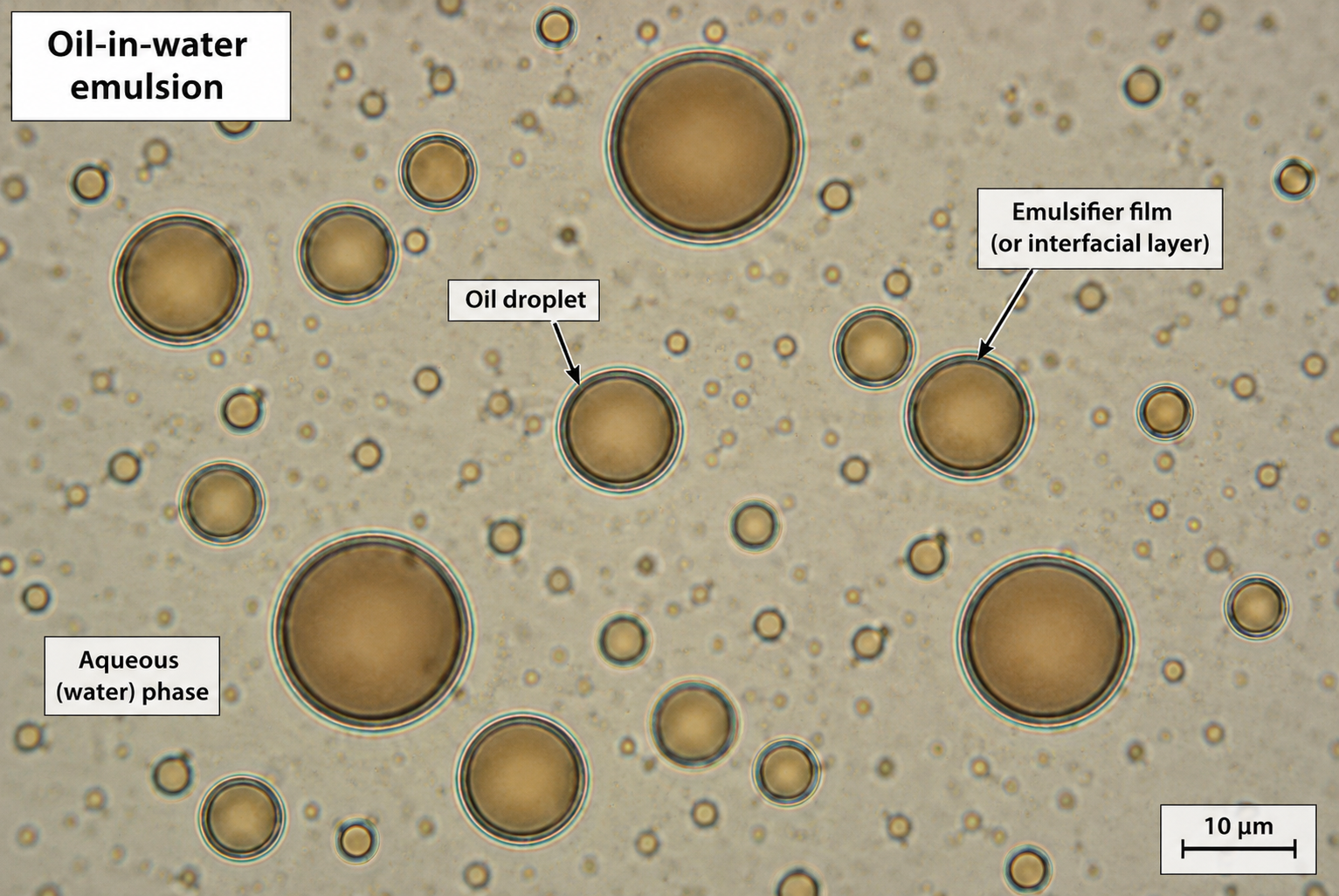
An oil-in-water (O/W) emulsion is a formulation in which small oil droplets are dispersed throughout a continuous water phase. O/W emulsions are widely used in cosmetic creams, lotions and other emulsified products because they generally provide a lighter, easily spreadable skin feel.
Typical Oil Phase
O/W emulsions can contain a wide range of oil-phase concentrations depending on the product type and desired sensory profile. Lightweight lotions may contain a relatively low oil phase, while richer creams can contain substantially higher levels.
The appropriate oil-phase concentration should be selected according to the desired texture, skin feel, viscosity and stability of the finished product.
How Are O/W Emulsions Stabilized?
The stability of an O/W emulsion depends on several factors, including emulsifier selection, droplet size, viscosity of the continuous phase, phase ratio, processing conditions and the compatibility of the formulation ingredients.
Increasing the viscosity of the water phase can help reduce the movement of dispersed oil droplets and may therefore contribute to improved physical stability.
Common Thickeners for O/W Emulsions
Water-phase viscosity can be increased using ingredients such as xanthan gum, alginates, carrageenans and cellulose derivatives.
Carbomers and other rheology modifiers are also commonly used in O/W formulations to control viscosity and contribute to physical stability when properly incorporated and neutralized.
Choosing Emulsifiers for O/W Emulsions
O/W emulsions generally require emulsifier systems that favor the formation of oil droplets within a continuous water phase. The appropriate emulsifier depends on the composition of the oil phase, desired sensory profile, formulation pH, electrolytes and other ingredients.
Commonly used O/W emulsifier systems include glyceryl stearate, polysorbates, PEG-based emulsifiers and various nonionic emulsifiers.
The emulsifier should always be selected according to the specific oil phase and overall formulation rather than based on HLB value alone.
How Much Emulsifier Should Be Used?
There is no single universal use level for an O/W emulsifier. The required concentration depends on the emulsifier system, oil-phase composition, emulsifier-to-oil ratio, processing conditions and desired stability.
For this reason, emulsifier concentration should be established during formulation development and confirmed through appropriate stability testing rather than relying on a fixed percentage.
O/W Emulsion Stability
Several factors can influence the physical stability of an O/W emulsion.
Droplet Size
Smaller and more uniform droplets can generally improve physical stability and reduce the tendency toward creaming or coalescence.
Water-Phase Viscosity
Increasing the viscosity of the continuous phase can reduce droplet movement and help slow physical separation.
Emulsifier System
The emulsifier must be compatible with the oil phase and capable of maintaining a stable interface between the oil and water phases.
Electrolytes and Ionic Ingredients
Salts and other ionic ingredients can affect the performance of certain emulsifiers and polymeric thickeners.
Temperature
Temperature changes can influence viscosity, droplet interactions and the physical and chemical stability of the formulation.
pH
Changes in pH can affect emulsifier performance, polymer viscosity and the compatibility of individual ingredients.
Processing
Homogenization, mixing intensity, temperature and the order of addition can all influence the final droplet size and stability of the emulsion.
O/W vs W/O Emulsions
The main difference between O/W and W/O emulsions is the continuous phase.
In an O/W emulsion, water is the continuous phase and oil is dispersed as droplets.
In a W/O emulsion, oil is the continuous phase and water is dispersed as droplets.
O/W emulsions generally provide a lighter and less oily sensory profile, while W/O emulsions can provide a richer and more occlusive skin feel.
Common Applications of O/W Emulsions
O/W emulsions are widely used in cosmetic products such as face creams, body lotions, moisturizers, light emulsions, cleansing products and sun care formulations.
The same basic emulsion principle can be adapted to create products ranging from lightweight lotions to rich creams by modifying the oil phase, emulsifier system, rheology modifiers and processing conditions.
Key Takeaway
Oil-in-water emulsions are versatile cosmetic systems in which oil is dispersed in a continuous water phase. Their performance and stability depend on the interaction between the emulsifier system, oil phase, water-phase rheology, processing conditions, pH and other formulation ingredients.
For commercial cosmetic formulations, the optimal emulsifier, oil-phase composition and thickening system should be determined according to the specific product requirements and confirmed through appropriate stability and compatibility testing.
Source: Handbook of Cosmetic Science and Technology – André O. Barel, Marc Paye, Howard I. Maibach.
Palmitoyl tripeptide-1 is a signal peptide that results of the conjugation of palmitic acid with tripeptide-1 which performs two functions: signal peptide and carrier peptide when complexed with copper. Palmitoyl tripeptide-1 act on the TGF-β, which is responsible for stimulating dermal fibroblasts to produce ECM proteins, which will reinforce the epidermis, but also reduce wrinkles.
Source: Journal of Drug Delivery Science and Technology - Anti-aging peptides for advanced skincare: Focus on nanodelivery systems

Ozokerite wax is generally a white, crystalline, odorless and tasteless solid. It is most often made from blends of paraffin and microcrystalline waxes, and when combined offers broader functionality than the constituent ingredients. It is used extensively in personal care and cosmetic formulations. It will increase viscosity, assist in emulsion stability and enhance gel strength in liquid and semi-solid systems. It is a hard wax with a relatively high melting point. These characteristics encourage its use in lipstick and lip care products to promote structure and stick strength.
Source: Cosmetic Formulation Principles and Practice - Heather A.E. Benson, Michael S. Roberts, Vânia Rodrigues Leite-Silva, Kenneth A. Walters

The main components are long-chain wax esters with chain lengths of around C60. Although it has
similar chemistry to sunflower wax, its applications are quite different. Refined rice bran wax has a very
hydrophobic character. It forms soft oil gels and is therefore highly preferred for emulsions like mascaras
and skin care products.
Source: Cosmetic Formulation Principles and Practice - Heather A.E. Benson, Michael S. Roberts, Vânia Rodrigues Leite-Silva, Kenneth A. Walters
