Why Can a Few Percent of an Ingredient Completely Change a Cream? The Role of Rheology in Cosmetics

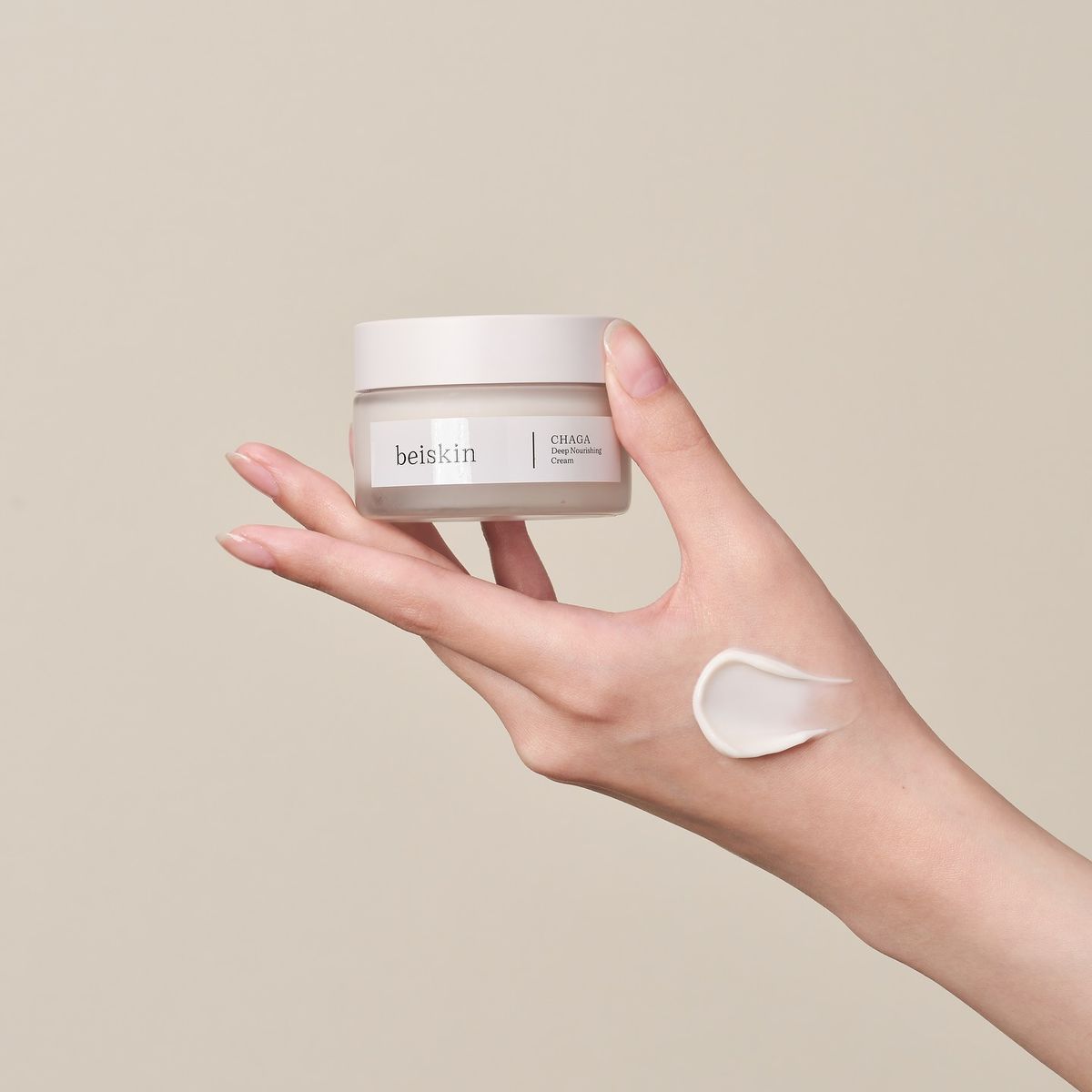
A cream can look almost identical after a small formulation change and yet feel completely different on the skin.
It may suddenly become easier to spread. Perhaps it no longer holds its shape in the jar. Maybe it comes out of the tube too easily, or the opposite happens: the product becomes difficult to dispense and feels heavy during application.
Sometimes the difference comes from only a few percent of an ingredient.
This is where rheology becomes important.
Rheology is the science of how materials flow and deform. In cosmetic formulation, it helps explain why a cream behaves differently when it is sitting in a jar, being squeezed from a tube or being rubbed across the skin.
And importantly, viscosity is only part of the story.
What Is Rheology in Cosmetic Formulation?
In simple terms, rheology describes how a material responds when a force is applied to it.
Viscosity describes resistance to flow. A material with high viscosity generally requires more force to make it flow than a low-viscosity material.
But many cosmetic products are not simple liquids.
Creams, lotions, gels and other dispersed systems often have more complex behaviour. They can combine viscous and elastic characteristics and may respond differently depending on how much force is applied and how long that force is maintained.
This is why a cream can behave almost like a solid while sitting in a jar and then become much more fluid when spread across the skin.
The New Cosmetic Science literature describes rheology as the study of changes in form and the dynamics of flow, noting that cosmetic disperse systems frequently show complex behaviour involving both viscosity and elasticity.
That complexity is not a problem.
In many cases, it is exactly what the formulator wants.
Why Doesn't a Cream Have One Fixed Viscosity?
The viscosity of many cosmetic formulations depends on how the product is being stressed.
A simple Newtonian liquid, such as water, has a relatively constant viscosity under different shear conditions.
Most creams and many other cosmetic formulations behave differently. They are non-Newtonian.
Their apparent viscosity can change as the applied shear rate changes.
This matters because a cosmetic product experiences very different mechanical conditions throughout its life.
Consider a facial cream:
In the jar: it needs enough structure to remain where it was placed.
During dispensing: it needs to move through the opening without excessive force.
During application: it needs to spread easily under the relatively high shear generated by rubbing.
After application: it should form an even layer without becoming excessively mobile.
These are different rheological requirements for the same product.
The Handbook of Cosmetic Science and Technology specifically notes that rheological properties influence manufacturing, filling, removal from packaging and sensory characteristics such as consistency, spreadability and smoothness.
Shear: Why Rubbing a Cream Changes Its Behaviour
One of the key concepts in rheology is shear.
When different layers of a material move relative to one another, the material experiences shear.
Applying a cream to the skin creates substantial shear because the product is being spread across the surface.
Many cosmetic emulsions respond to this by becoming less viscous.
This behaviour is called shear thinning.
It is extremely useful.
A cream can maintain a relatively structured consistency during storage but become easier to spread when the consumer applies force.
The Delivery System Handbook for Personal Care and Cosmetic Products describes this behaviour in lamellar gel network emulsions. Mechanical stress during application can cause the network structure to collapse, resulting in lower viscosity at the high shear rates associated with spreading.
This is a good example of rheology working for the consumer rather than simply being a laboratory measurement.
What Is Thixotropy?
Thixotropy is related to shear thinning, but it adds an important element:
time.
A thixotropic material becomes less viscous when subjected to shear and can gradually rebuild its internal structure when the shear is removed.
Imagine a cream sitting undisturbed in a container.
Its internal structure provides a certain degree of resistance to flow.
You begin spreading it.
The applied force disrupts part of that structure, and the cream becomes easier to spread.
Once the force disappears, the structure begins to recover.
That recovery is what makes thixotropy particularly useful in topical products.
The Handbook of Cosmetic Science and Technology describes thixotropy as a time-dependent phenomenon involving both a reduction in viscosity under shear and subsequent structural recovery.
Why Thixotropy Can Make a Cream Feel Better
A well-designed cream often needs to satisfy two seemingly contradictory requirements:
It should stay where you put it.
It should spread easily when you rub it.
Thixotropic behaviour can help achieve both.
The Handbook of Cosmetic Science and Technology gives the example of an ideal topical product that does not flow excessively from a tube or container under its own weight, but becomes more fluid when sufficient stress is applied during spreading.
This is a subtle but important aspect of product design.
A formulation that is simply "very thick" is not necessarily a good cream.
If its viscosity remains high even during application, the product may feel difficult to spread.
A formulation with the right rheological profile can instead feel substantial in the package while becoming much more fluid during application.
What Happens If the Structure Recovers Too Quickly?
This is where rheology becomes directly connected to sensory perception.
Research described in the Delivery System Handbook provides an interesting example involving lamellar gel network emulsions.
If the structure of an emulsion recovers too quickly after shear, the product can remain concentrated on the peaks of the skin surface and produce a greasy sensation.
If recovery is too slow, or if the system has little structural character, the formulation can flow more deeply into the valleys of the skin surface and produce a different, potentially drier sensory impression.
This does not mean that there is one universally correct recovery time.
It means that the rate of structural recovery influences how the product is experienced on the skin.
That is a much more useful way to think about rheology than simply asking whether a cream is "thick enough."
Why Can a Small Formulation Change Have Such a Large Effect?
This is one of the most interesting questions in cosmetic formulation.
A cream is not simply a mixture of independent ingredients.
Its internal structure can depend on interactions between:
- the continuous phase;
- the dispersed phase;
- emulsifiers;
- polymers;
- fatty materials;
- electrolytes;
- water content;
- particle size;
- and viscosity modifiers.
Changing the concentration of one component can therefore alter the structure of the entire system.
The Handbook of Cosmetic Science and Technology specifically points out that small changes in the concentration or ratio of certain ingredients can produce substantial changes in rheological characteristics. Emulsions are particularly sensitive because their rheology depends on factors including the viscosity of the internal and external phases, phase-volume ratio, particle-size distribution, emulsifier system and viscosity-modifying ingredients.
This explains why a seemingly minor reformulation can produce a surprisingly large sensory difference.
The ingredient may not be acting alone.
It may be changing the network that holds the whole formulation together.
Get the latest posts
Unlock a world of knowledge and inspiration - subscribe to our blog for exclusive content, expert insights, and exciting updates!
The Hidden Structure Inside a Cream
Many creams are more structurally complex than they appear.
The Principles of Polymer Science and Technology in Cosmetics and Personal Care describes many personal-care emulsions as semisolid systems containing three-dimensional colloidal structures in which a liquid is incorporated.
These structures can behave partly like solids at rest and become more liquid-like under the stress of application.
Their rheology can influence not only consistency, but also stability, interaction with the skin and release of ingredients.
This is one reason why rheological behaviour can be such a useful window into formulation structure.
If a formulation suddenly becomes much thinner, for example, the change may indicate more than a simple change in "thickness".
It may reflect a change in the internal organisation of the emulsion.
Rheology and Emulsion Stability
Texture is not the only reason formulators measure rheology.
Rheological properties can also be related to physical stability.
A structured continuous phase can help limit movement within an emulsion. The characteristics of the dispersed droplets, interfacial films and surrounding continuous phase all contribute to the overall behaviour of the system.
However, rheology alone cannot guarantee stability.
The polymer literature specifically cautions that interfacial rheology should not be treated as a universal predictor of emulsion stability. Other factors, such as interfacial-film thickness and drainage, can be more important in particular systems.
This is another important formulation principle:
A single measurement rarely explains an entire cosmetic system.
Rheology is valuable because it provides information about the structure and behaviour of the formulation, but it needs to be interpreted alongside other stability and performance data.
Rheology Also Changes During Application
A cosmetic product does not necessarily remain in exactly the same physical state after it leaves the package.
Mechanical stress, skin temperature, evaporation of volatile components and interaction with the skin can all change the formulation.
The Handbook of Cosmetic Science and Technology describes this as vehicle metamorphosis.
These changes can influence viscosity and, consequently, the release of active ingredients from the vehicle. Changes in composition after application can even alter the thermodynamic activity of an active and therefore affect its release and delivery.
This is particularly interesting for advanced formulation.
The formula that exists in the bottle or jar is not necessarily the exact system that exists on the skin several minutes later.
For a formulator, that means product performance needs to be considered during use, not only during storage.
How Is Cosmetic Rheology Measured?
There is no single universal viscosity measurement that completely describes a cream.
The appropriate method depends on what the formulator wants to understand.
Different instruments and test conditions can examine:
- viscosity;
- shear-dependent flow;
- yield stress;
- thixotropic behaviour;
- elasticity;
- structural recovery;
- and viscoelastic properties.
The New Cosmetic Science literature emphasises that the measurement method itself can influence the result because applying an external force can change the structure of a dispersed cosmetic system. This is why the measurement method needs to be selected according to the purpose of the investigation.
Rotational and oscillatory instruments are commonly used for complex, non-Newtonian cosmetic systems.
This is why simply reporting "viscosity = X" may not tell a formulator enough.
Two creams could have similar viscosity values under one measurement condition and behave quite differently during actual application.
Rheology Is Part of the Consumer Experience
Consumers rarely use the word "rheology."
They use words such as:
- rich;
- light;
- silky;
- thick;
- smooth;
- greasy;
- easy to spread;
- sticky;
- fast-absorbing;
- or luxurious.
Many of these perceptions are connected to the physical behaviour of the formulation.
This relationship between measurable rheological properties and human perception has even been described using the term psychorheology.
The New Cosmetic Science literature specifically connects rheological research with characteristics perceived by consumers, including the extensibility and feel of creams and the feel of hair after shampoos and rinses.
This is why rheology is not merely a quality-control exercise.
It can be part of sensory product design.
The Formulator's Challenge: Designing the Right Flow Behaviour
The objective is rarely to maximise viscosity.
Instead, the formulator has to decide what the product should do at different stages of its life.
A facial cream may need:
- sufficient structure for packaging;
- resistance to unwanted flow during storage;
- controlled dispensing;
- easy spreading;
- appropriate structural recovery;
- uniform coverage;
- and a pleasant after-feel.
A serum, cleansing gel, body lotion and hair conditioner will have very different requirements.
The right rheological profile therefore depends on the product's intended use.
This is why changing a thickener simply because "the cream needs to be thicker" can sometimes create more problems than it solves.
The formulation may become more viscous but less pleasant to dispense, harder to spread or less stable under processing conditions.
The Bottom Line
Rheology explains something consumers experience every day without necessarily realising it:
a cosmetic product does not behave the same way under every condition.
A cream can be structured at rest, become thinner when squeezed or rubbed, and then partially rebuild its structure after application.
Viscosity tells us about resistance to flow. Shear explains how applied force changes that behaviour. Shear thinning can make a cream easier to spread, while thixotropy describes the time-dependent breakdown and recovery of its internal structure.
And these properties are not purely technical.
They influence dispensing, spreading, stability, skin coverage, active release and the sensory character of the finished product.
Perhaps most importantly, the relationship between ingredients is often nonlinear. A small change in the concentration or ratio of an emulsifier, polymer, electrolyte or other structural component can produce a disproportionately large change in the behaviour of the entire formulation.
That is why a good cream is not simply a mixture with the "right viscosity."
It is a carefully structured system designed to behave correctly at rest, during application and after application.
References
- Barel, A. O., Paye, M., & Maibach, H. I. (Eds.). (2009). Handbook of Cosmetic Science and Technology, 3rd ed. Informa Healthcare.
- Suzuki, M. (Ed.). New Cosmetic Science. Source material covering cosmetic rheology, viscosity, flow behaviour and rheological measurement methods.
- Rosen, M. R. (Ed.). (2005). Delivery System Handbook for Personal Care and Cosmetic Products: Technology, Applications, and Formulations. William Andrew Publishing.
- Schueller, R., & Romanowski, P. (Eds.). (1999). Principles of Polymer Science and Technology in Cosmetics and Personal Care. Marcel Dekker.
Related posts
Cosmetic Emulsions: Formulation, Common Emulsifiers & Stability Insights