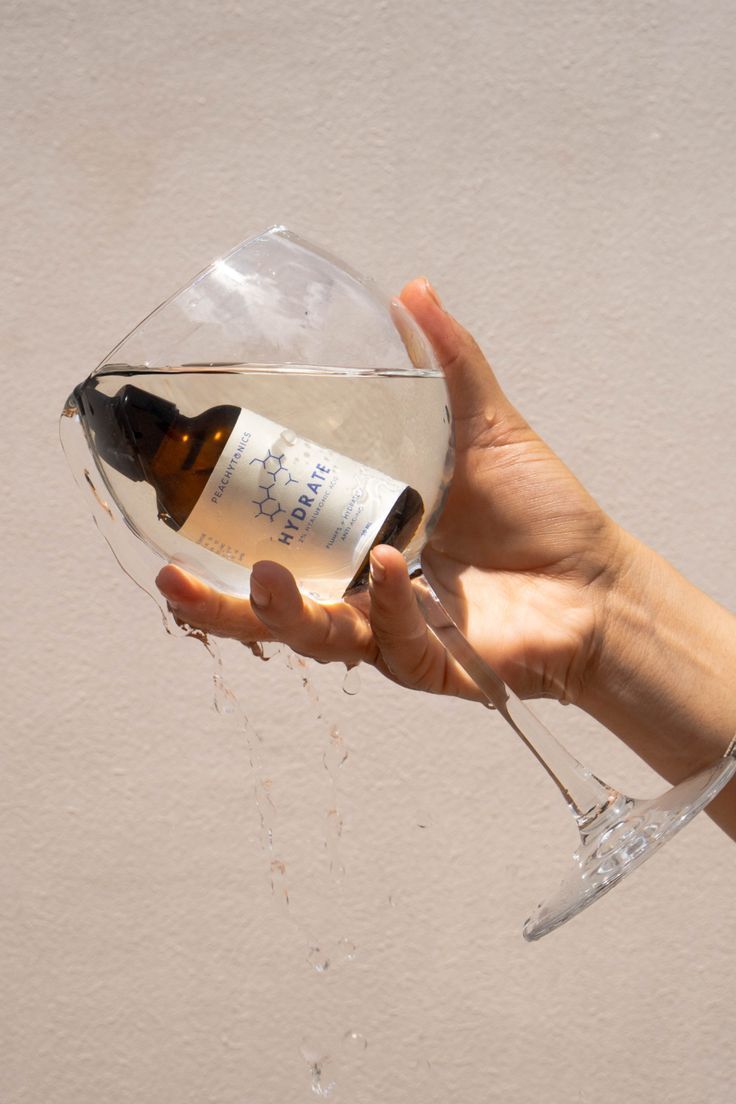
How Do Moisturizers Work? Humectants, Emollients and Occlusives Explained

Understanding these differences is important not only when choosing a skincare product, but also when developing one.
What does a moisturizer actually do?
The outermost layer of the skin, the stratum corneum, needs a certain amount of water to remain flexible and function properly.
Our skin is constantly losing water to the surrounding environment. If water loss becomes too high, the skin can become dry, rough and tight.
A moisturizer is designed to help counteract this process. It can do so by attracting water, helping the skin retain water, or improving the condition of the skin surface.
This is why moisturizers are usually discussed in three main categories:
- Humectants
- Emollients
- Occlusives
Although they work differently, they are often used together in the same cosmetic formulation. (Cosmetic Formulation: Principles and Practice, 2019, Heather A. E. Benson, Michael S. Roberts, Vânia Rodrigues Leite-Silva and Kenneth A. Walters, eds.)
Humectants: ingredients that attract water
Humectants are probably the easiest group to understand.
They attract and bind water, helping to increase hydration in the outer layers of the skin. They can draw water from the formulation itself and, depending on the circumstances, from deeper layers of the skin.
One of the best-known examples is glycerin, also called glycerol.
Glycerin has been used in skincare for a very long time and remains one of the most common moisturizing ingredients. Its ability to bind water makes it particularly useful in creams and lotions designed for dry skin. (Cosmetic Formulation: Principles and Practice, 2019, Heather A. E. Benson, Michael S. Roberts, Vânia Rodrigues Leite-Silva and Kenneth A. Walters, eds.)
Other humectants include ingredients such as urea and components related to the skin's natural moisturizing factor (NMF).
However, there is an important detail here: simply adding a humectant does not automatically guarantee the same result in every product. The concentration, the rest of the formulation and the conditions in which the product is used can all influence its performance.
Emollients: making dry skin feel smoother
Emollients work somewhat differently.
Rather than primarily attracting water, they help improve the feel, softness and smoothness of the skin. They can also interact with the surface and lipid structures of the stratum corneum.
This is why a good moisturizer often produces an immediate sensory change. After application, the skin may feel softer, smoother and less rough even before longer-term changes in hydration have occurred.
From a product-development perspective, emollients are also important because they have a major influence on the sensory character of a formulation.
Two moisturizers could contain similar moisturizing ingredients but feel completely different on the skin depending on the oils, emollients and other components used.
That difference is not accidental. Sensory performance is part of formulation design.
Occlusives: helping to keep water in
Occlusive ingredients take another approach.
Instead of attracting water, they help reduce water loss from the surface of the skin by forming a film over it.
Petrolatum is one of the best-known examples. Oils and other lipid-based materials can also provide varying degrees of occlusive effect.
This can be particularly useful when the skin is very dry because reducing water loss gives the outer layers of the skin more opportunity to retain moisture.
Research on moisturizers has shown that applying occlusive substances can reduce transepidermal water loss (TEWL) and increase hydration of the stratum corneum. (Cosmetic Formulation: Principles and Practice, 2019, Heather A. E. Benson, Michael S. Roberts, Vânia Rodrigues Leite-Silva and Kenneth A. Walters, eds.)
Why are the three approaches often combined?
This is where a moisturizer becomes more interesting from a formulation perspective.
A well-designed product does not necessarily have to choose between a humectant, an emollient and an occlusive. They can complement one another.
For example, a formulation might contain:
Glycerin → helps attract and retain water
An emollient → improves softness and skin feel
An occlusive component → helps reduce water loss
Together, these ingredients can address different aspects of moisturization.
The Dermatologic, Cosmeceutic, and Cosmetic Development book describes humectants, occlusives and emollients as the traditional foundation of cosmetic treatments for dry skin. It also discusses newer approaches involving ingredients such as ceramides, other lipid-forming materials and niacinamide. (Dermatologic, Cosmeceutic, and Cosmetic Development: Therapeutic and Novel Approaches, 2008, Kenneth A. Walters and Michael S. Roberts, eds.)
Get the latest posts
Unlock a world of knowledge and inspiration - subscribe to our blog for exclusive content, expert insights, and exciting updates!
Does a more expensive moisturizer work better?
Not necessarily.
The price of a product tells you very little about how effectively it moisturizes the skin.
What matters is the complete formulation.
The choice and concentration of moisturizing ingredients are important, but so are the vehicle, the combination of ingredients, the stability of the formula and the way the product is intended to be used.
This is one of the reasons formulation development is more complicated than simply putting a popular ingredient into a cream.
For example, the performance of urea-containing moisturizers can vary depending on the formulation. Studies discussed in Handbook of Cosmetic Science and Technology also illustrate that moisturizing ingredients can have different effects on hydration, water retention and skin properties. (Handbook of Cosmetic Science and Technology, 2001, André O. Barel, Marc Paye and Howard I. Maibach, eds.)
How do you know whether a moisturizer actually works?
A moisturizer can certainly be evaluated by how the skin looks and feels, but cosmetic science also provides objective ways of measuring its effects.
For example, TEWL can provide information about water loss through the skin, while instruments such as a corneometer can be used to assess changes in skin hydration.
There is no single measurement that tells the whole story. Different moisturizers can work through different mechanisms, so studies may need to look at several characteristics, including water binding, water retention and changes in the skin surface. (Handbook of Cosmetic Science and Technology, 2001, André O. Barel, Marc Paye and Howard I. Maibach, eds.)
This is particularly important when a brand wants to make a specific efficacy claim about a finished cosmetic product.
The formulation makes the difference
One of the most useful lessons from moisturizer science is that there is no single “best moisturizing ingredient.”
Glycerin may be highly effective in one type of formulation. An occlusive system may be more appropriate for another product. A combination of humectants, emollients and lipid-based ingredients may be preferable for a different target skin type.
The right choice depends on the product's purpose.
A lightweight facial serum designed for daytime use has very different formulation requirements from a rich overnight cream for extremely dry skin.
This is where formulation expertise becomes important. The goal is not simply to collect moisturizing ingredients, but to determine which ingredients, at what levels, in which formulation system, will provide the desired combination of efficacy, stability and sensory performance.
At A&T Formulation, this complete formulation approach is an essential part of developing skincare products. The finished product needs to work as a whole — not just look impressive on an ingredient list.
The key takeaway
Moisturizers work in several different ways.
Humectants attract and bind water. Emollients improve softness and smoothness. Occlusives help reduce water loss.
The most effective approach is often a combination of these mechanisms, carefully selected for the purpose of the finished product.
And that is the key point for cosmetic development: a moisturizer is not defined by one ingredient. Its performance comes from the formulation as a whole.
Related posts
Cosmetic Emulsions: Formulation, Common Emulsifiers & Stability Insights