Surfactants in Cosmetics: Why They Do Far More Than Create Foam

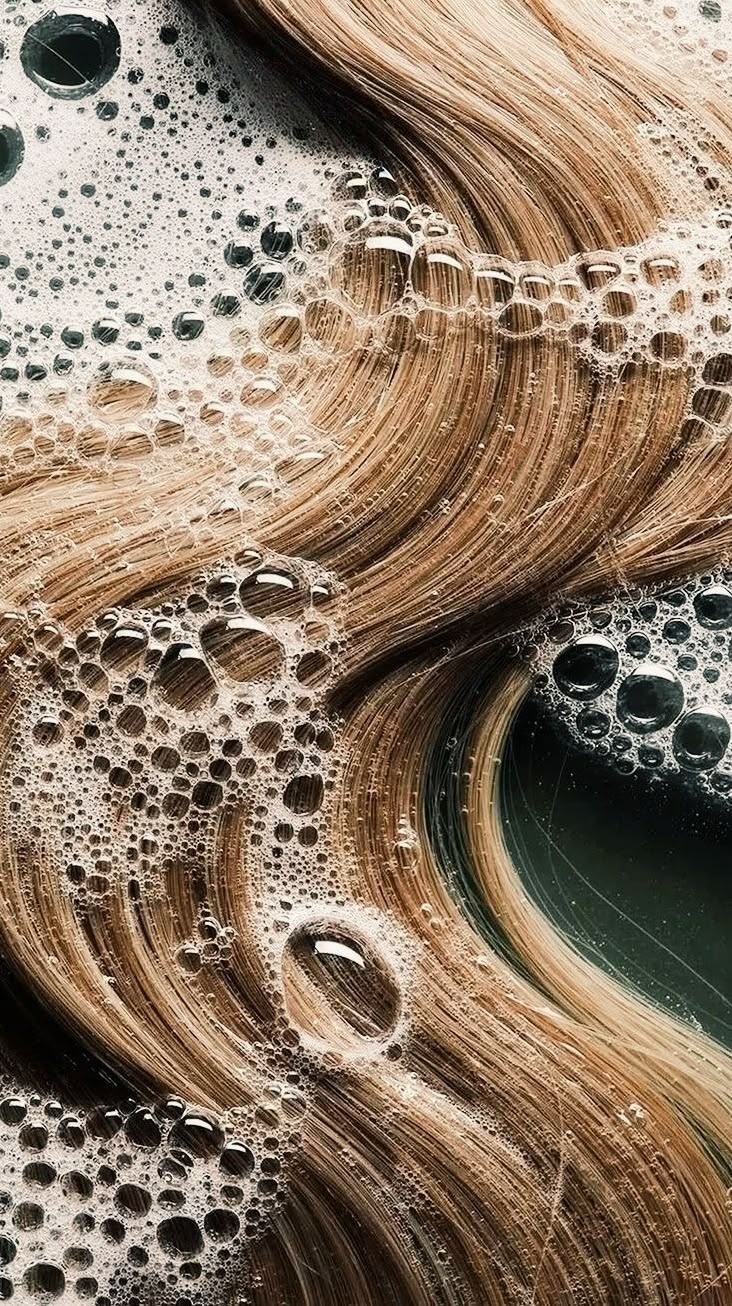
When people hear the word surfactant, they often think of shampoo, bubbles and cleansing.
That is understandable. Surfactants are responsible for much of the foam we associate with shampoos, shower gels and facial cleansers.
But foam is only one part of the story.
Surfactants can help remove oil and dirt, reduce surface tension, improve wetting, stabilise emulsions, solubilise ingredients and influence the texture and sensory properties of a finished product. In some formulations, they can even interact with polymers and other ingredients in ways that significantly change viscosity and product performance.
For a cosmetic formulator, choosing a surfactant is therefore not simply a question of "How much foam do we want?"
The more useful question is:
What does the surfactant need to do in this particular formulation?
What Is a Surfactant?
A surfactant, short for surface-active agent, is an amphiphilic molecule. This means that it contains both a hydrophilic part, which has an affinity for water, and a hydrophobic part, which has an affinity for oils or other non-polar materials.
This unusual structure is what gives surfactants their versatility.
They tend to accumulate at interfaces, such as:
- oil and water;
- air and water;
- water and a solid surface.
By concentrating at these interfaces, surfactants can reduce surface or interfacial tension and change how different materials interact.
This basic property is behind many of their applications in cosmetic formulation.
Surfactants Are Not Just Cleansing Ingredients
In cosmetic products, surfactants can perform several different functions.
Depending on their chemical structure and concentration, they may act as:
Cleansing agents – helping remove sebum, dirt, cosmetic residues and other substances from the skin or hair.
Emulsifiers – helping oil and water form a stable emulsion.
Wetting agents – helping a liquid spread over and interact with a surface.
Foaming agents – promoting the formation and stability of foam.
Solubilising agents – helping incorporate certain poorly water-soluble materials into aqueous systems.
These functions are related to the same fundamental chemistry, but they are not identical.
A surfactant that performs exceptionally well as a cleanser is not necessarily the best choice for a facial emulsion. Likewise, a surfactant that produces impressive foam may not be appropriate for a formulation designed for sensitive skin.
How Do Surfactants Actually Clean the Skin?
Cleansing is more complicated than simply "dissolving dirt".
Skin soils can contain sebum, oils, cosmetic residues, particulate matter and other substances with very different chemical properties.
Surfactants can assist their removal through several mechanisms.
One mechanism involves wetting. By reducing surface tension, the cleansing solution can spread more effectively over the skin and interact with the material that needs to be removed.
Another involves micellar solubilisation. Above a certain concentration, surfactant molecules can organise themselves into structures called micelles. Hydrophobic components can associate with the interior of these structures while the hydrophilic portions remain oriented toward the surrounding water.
A further mechanism involves dispersion and emulsification of oily material.
The Handbook of Cosmetic Science and Technology describes several proposed mechanisms for cleansing, including roll-up, micellar solubilisation, and dispersion or emulsification of soil. The relative contribution of these mechanisms can depend on the type of soil and the formulation.
So even within a simple facial cleanser, several physical and chemical processes can occur simultaneously.
What Are Micelles and Why Do They Matter?
Micelles are one of the most important concepts in surfactant chemistry.
At low concentrations, surfactant molecules are primarily present individually in solution. As the concentration increases, the system eventually reaches the critical micelle concentration (CMC).
Above the CMC, additional surfactant can increasingly form micellar aggregates.
The exact behaviour depends on the chemical structure of the surfactant and other formulation conditions.
The New Cosmetic Science literature explains that micelle formation changes several measurable properties of the solution, including surface tension and detergent behaviour. The CMC therefore provides useful information about how a particular surfactant system behaves in aqueous solution.
Micelles are particularly relevant to cleansing because they can help incorporate oily or otherwise poorly water-soluble materials into an aqueous cleansing system.
But reaching the CMC does not automatically mean that a cleanser is ideal.
The complete surfactant system still determines how the product behaves on skin, how effectively it removes soil and how it feels during and after washing.
Foam Looks Good, But Foam Is Not the Same as Cleansing
This is one of the most persistent misconceptions about surfactants.
A cleanser can produce a large amount of foam and still not necessarily be a better cleanser than a low-foaming product.
Conversely, a low-foaming cleanser can remove soil effectively.
Foam is often an important sensory signal for consumers. People associate abundant lather with cleaning, so formulators may deliberately design a product to produce a certain type of foam.
The dermatological literature specifically notes that non-foaming and low-foaming cleansers can still provide effective cleansing. Foam boosters may sometimes be included primarily to improve the consumer experience rather than because they are required for cleansing itself.
This distinction is important when developing modern gentle cleansers.
The objective is not necessarily maximum foam.
It may be the right balance between cleansing performance, mildness and sensory experience.
The Four Main Surfactant Classes
Surfactants used in cosmetics are commonly grouped according to the charge of their hydrophilic portion.
Anionic surfactants
Anionic surfactants carry a negative charge.
They are widely used in cleansing products because many provide strong cleansing and good foaming properties.
However, some anionic systems can be relatively irritating, particularly when used at high concentrations or in formulations that are not designed to moderate their interaction with the skin.
This is why anionic surfactants are often combined with other surfactant types.
Amphoteric surfactants
Amphoteric, or zwitterionic, surfactants can carry different charges depending on the formulation environment.
Betaines are familiar examples.
They are widely used in cleansing systems and can contribute both to mildness and foam performance. Their behaviour can also depend on pH.
Nonionic surfactants
Nonionic surfactants do not carry an overall electrical charge.
They are often valued for their relatively mild character and can be useful for solubilisation and other formulation functions.
They are not necessarily strong foam producers, which can actually be an advantage in products where low foam is desired.
Cationic surfactants
Cationic surfactants carry a positive charge.
Their strong interaction with negatively charged surfaces makes them particularly useful in conditioning applications, especially hair care.
However, their behaviour is very different from that of typical cleansing surfactants, and their compatibility with other formulation ingredients needs careful consideration.
The dermatological literature describes these four main classes and highlights the differences in cleansing, foaming and tolerability between them.
Why Do Formulators Mix Different Surfactants?
One of the more interesting aspects of surfactant formulation is that a mixture can perform better than either surfactant alone.
This is known as surfactant synergy.
For example, combining different surfactants can improve properties such as:
- foaming;
- wetting;
- detergency;
- emulsification;
- and surface-tension reduction.
The Cosmetic Formulation: Principles and Practice literature describes how synergistic interactions between surfactants can allow a mixture to achieve a desired level of performance at a lower overall surfactant concentration than might be required from an individual component.
This is particularly relevant in shampoos and shower gels.
Anionic surfactants may provide strong cleansing and foam, while amphoteric surfactants can modify the overall system and contribute to thickening and foam behaviour.
The result is not simply a compromise between two ingredients.
When the interactions are favourable, the combination can produce a formulation with properties that would be difficult to achieve using either surfactant independently.
Surfactants Can Also Affect Viscosity
This is an area that is easy to overlook.
A surfactant does not exist in isolation inside a cosmetic formula.
It can interact with polymers, electrolytes and other ingredients.
One particularly interesting example is the interaction between anionic surfactants and cationic polymers.
The Principles of Polymer Science and Technology in Cosmetics and Personal Care describes how these interactions can produce polymer-surfactant complexes and coacervates. Under appropriate conditions, this behaviour can contribute to viscosity changes and, in conditioning shampoos, deposition of conditioning polymers onto hair during rinsing.
This is an excellent example of why changing a surfactant concentration can sometimes have consequences far beyond cleansing performance.
A small formulation adjustment can alter the interaction between several components at once.
Legyen naprakész
Fedezze fel a tudás és az inspiráció világát - iratkozzon fel blogunkra, hogy exkluzív tartalmakat és izgalmas híreket kapjon a szépségipar világából!
Surfactants and Emulsions
Surfactants also play an essential role in many emulsions.
Oil and water naturally separate. An appropriate surfactant or emulsifier system can accumulate at the oil-water interface and help reduce interfacial tension while contributing to the formation of a stabilising interfacial layer.
The precise mechanism depends on the surfactant system and the formulation.
The New Cosmetic Science literature, for example, associates different HLB ranges with applications such as wetting, O/W emulsification, detergency and solubilisation. It also emphasises that HLB should be treated as a guide rather than as an absolute predictor of surfactant performance.
This connects directly with another important formulation principle:
the best surfactant for a particular job depends on what the formulation is trying to achieve.
Mildness vs. Cleansing: The Formulator's Balancing Act
A cleanser needs to remove unwanted material.
But it should not remove more from the skin than necessary.
Harsh surfactant systems or excessive washing can affect the stratum corneum and its intercellular lipids, potentially compromising barrier function.
This is why modern cleanser development often focuses on finding a balance between cleansing efficiency and skin compatibility.
The dermatological literature describes the development of milder surfactant systems and notes that increased mildness can sometimes come at the expense of foam or cleansing performance. Combining surfactants can help formulators find a better balance.
This is also why the idea that "all surfactants are harsh" is just as misleading as saying that "all surfactants are gentle."
There is a very broad range of surfactant chemistries and formulation strategies.
Skin Feel Is Part of Surfactant Selection
A cleanser can perform well analytically and still feel unpleasant.
The formulation may leave the skin feeling tight, dry, squeaky or uncomfortable.
Alternatively, a product can be designed with ingredients that reduce the defatting effect of cleansing and improve the after-feel.
The Handbook of Cosmetic Science and Technology discusses refatting ingredients and their influence on skin feel, including the use of certain lipophilic materials and monoglycerides in cleansing formulations. These ingredients can also influence foam quantity and stability, illustrating the trade-offs involved in cleanser design.
Again, there is no single "best" surfactant.
The final sensory experience depends on the whole formulation.
The Real Challenge Is Building the Right Surfactant System
Professional formulation is rarely about selecting one ingredient and adding it to a base.
A formulator may need to consider:
- the required cleansing strength;
- foam speed and texture;
- foam stability;
- skin or hair compatibility;
- pH;
- viscosity;
- polymer interactions;
- emulsification;
- solubilisation;
- salt tolerance;
- preservative compatibility;
- sensory properties;
- and the intended use of the final product.
Even water quality and the presence of electrolytes can influence surfactant behaviour.
This is why surfactant selection often involves testing combinations rather than simply choosing the ingredient with the most impressive specification sheet.
The Bottom Line
Surfactants are among the most versatile ingredients used in cosmetic formulation.
They can clean, wet, emulsify, solubilise, foam and stabilise. They can interact with polymers, modify viscosity and influence the way a product feels on the skin or hair.
And foam is only one small part of that picture.
The most successful surfactant systems are rarely built around a single property. Instead, they balance several competing requirements: cleansing efficiency, mildness, foam, stability, sensory performance and compatibility with the rest of the formula.
That is why developing a shampoo, facial cleanser or shower gel is much more than choosing a surfactant and adding water.
The real formulation work happens when the surfactants are combined with the rest of the system in a way that makes all of the components work together.
References
- Benson, H. A. E., Roberts, M. S., Leite-Silva, V. R., & Walters, K. A. (Eds.). (2019). Cosmetic Formulation: Principles and Practice. CRC Press.
- Barel, A. O., Paye, M., & Maibach, H. I. (Eds.). (2009). Handbook of Cosmetic Science and Technology, 3rd ed. Informa Healthcare.
- Suzuki, M. (Ed.). New Cosmetic Science. Source material covering surfactant chemistry, HLB, micelles and critical micelle concentration.
- Draelos, Z. D. (Ed.). (2010). Cosmetic Dermatology: Products and Procedures. Wiley-Blackwell.
- Schueller, R., & Romanowski, P. Principles of Polymer Science and Technology in Cosmetics and Personal Care. Source material covering surfactant-polymer interactions and coacervation.
Kapcsolódó bejegyzések
Cosmetic Emulsions: Formulation, Common Emulsifiers & Stability Insights