Cosmetic Emulsions: Formulation, Common Emulsifiers & Stability Insights

Cosmetic Emulsions: Formation, Key Emulsifiers, and Innovations
What is a cosmetic emulsion?
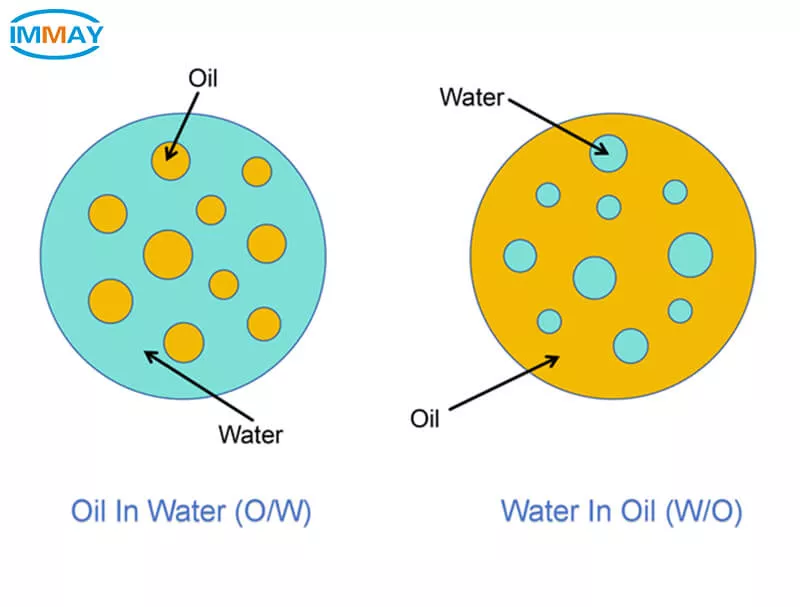
A cosmetic emulsion is a multiphase system in which one liquid is dispersed as droplets within another immiscible liquid, typically stabilized by an emulsifier or combination of emulsifiers and stabilizers. The most common systems in cosmetics are oil-in-water (O/W) and water-in-oil (W/O) emulsions.
How Emulsions Are Formed
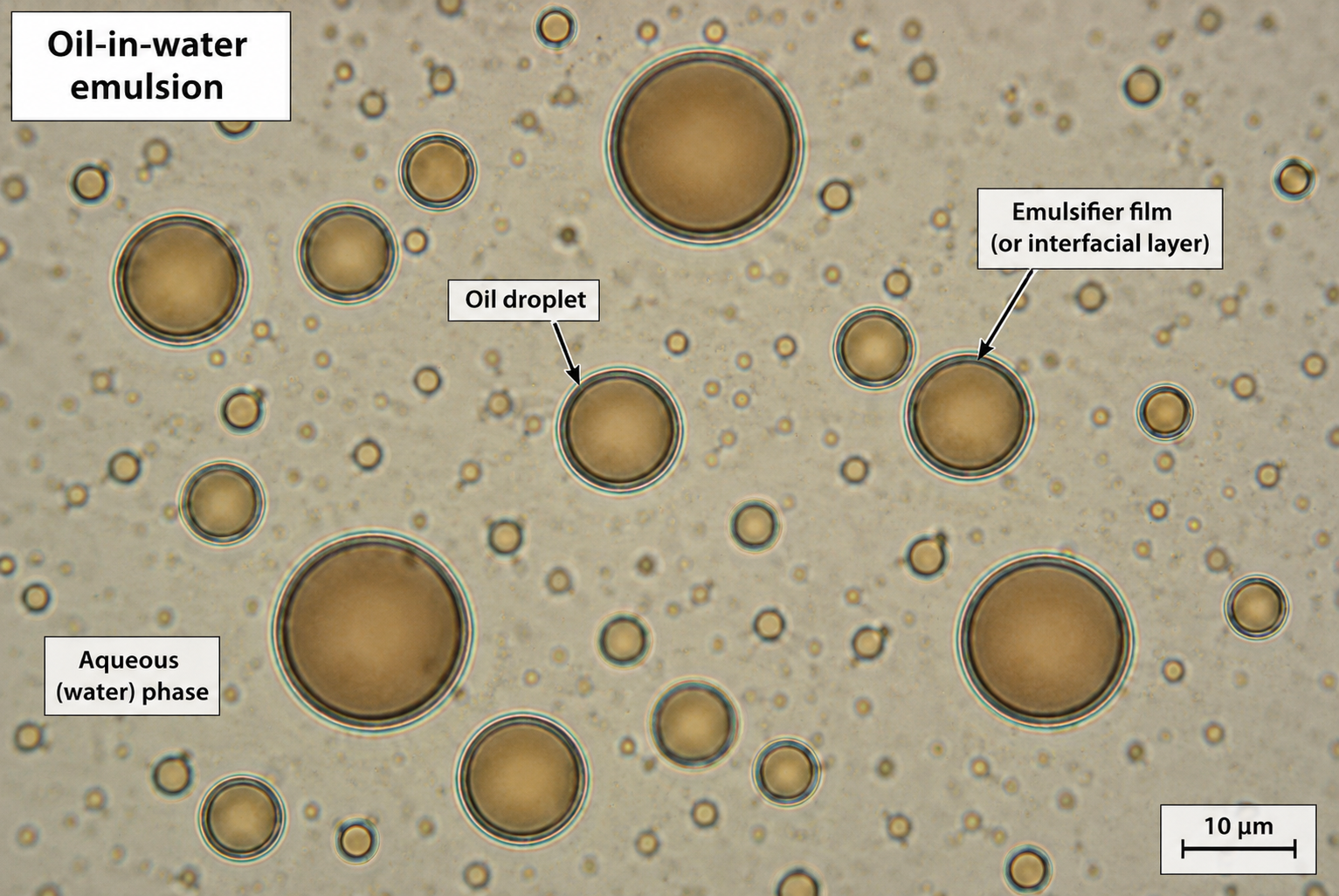
Making an emulsion generally means dispersing one liquid as tiny droplets within another (for example, oil droplets in water). High-shear mixing, homogenization or even ultrasonication is applied to break one phase into micrometer-scale droplets. However, without help these droplets would quickly coalesce back into two layers. That’s where emulsifiers come in. An emulsifier (a type of surfactant) is an amphiphilic molecule – one end attracts water, the other oil – which positions itself at droplet surfaces and creates a protective film. By reducing oil–water interfacial tension, emulsifiers allow droplets to stay small and separated. In practice, formulators often heat the oil phase (with oil-soluble ingredients) and water phase separately, then combine them under stirring so emulsifier molecules can rapidly adsorb at the new interfaces.
One rule-of-thumb is the HLB (Hydrophilic–Lipophilic Balance) system: a numeric scale (roughly 0–20) ranking surfactants from very oil-loving (low HLB) to very water-loving (high HLB). In general, oil-in-water (O/W) emulsions require higher-HLB emulsifiers (more hydrophilic) to stabilize droplets in water, whereas water-in-oil (W/O) emulsions need lower-HLB (more lipophilic) emulsifiers. Choosing the right HLB is a balance of the oil phase character and desired emulsion type, often achieved by blending emulsifiers (for example, using a mix of glyceryl stearate [HLB ~4.8] with PEG-100 stearate [HLB ~18] to get an intermediate overall HLB). In cosmetic labs, formulators may adjust ratios or use co-emulsifiers (like fatty alcohols or PEG ethers) to fine-tune droplet size and consistency. These emulsification techniques and ingredient choices give control over texture and stability.
How does a cosmetic emulsion become stable?
Stability depends on the interaction between droplet size, interfacial film properties, continuous-phase rheology, composition, processing conditions and storage environment.
In skincare and makeup, many products – from light lotions to rich creams – are emulsions: mixtures of oil and water phases held together by emulsifiers. You see the result as a uniform, creamy product instead of separate oil on top of water. Emulsions are metastable colloids, meaning the oily and watery parts don’t naturally stay mixed. To make them, formulators mechanically shear the two liquids together and add surfactants (emulsifiers) that sit at the oil–water interface and lower the interfacial tension. In cosmetics, this science is central: “in the cosmetics industry, emulsions account for a high percentage of the products,” so developing better emulsifiers is vital. A deeper look shows how emulsions form and behave, which ingredients drive stability, and what new technologies are emerging in modern formulations.
Emulsion Types and Their Uses
Cosmetic emulsions mainly fall into a few categories:
Key cosmetic difference: O/W creams are easy-to-spread, non-greasy, and hydrating; W/O creams are heavier, more moisturizing, and often water-resistant. Formulators often choose the emulsion type to match product claims and skin feel.
Emulsifiers Commonly Used in Cosmetics
Every emulsification relies on choosing the right emulsifier(s). The options include:
- Nonionic surfactants: These are by far the most used in skincare, as they are mild and stable across pH. Examples include PEG/PPG ethers (e.g. PEG-20 Stearate, Poloxamers), fatty acid esters (Glyceryl Stearate, PEG-100 Stearate), polysorbates (Tween 20, 60, 80) and sorbitan esters (Span 60, 80). A very popular natural-inspired system is cetearyl alcohol combined with cetearyl glucoside (trade name Montanov series by Gattefossé), which behaves like a mild, plant-derived emulsifier. Another is glyceryl stearate (often as Glyceryl Stearate SE) often paired with PEG/PPG-15 stearate.
- Amphoteric/phospholipid emulsifiers: Lecithin (phosphatidylcholine) and modified lecithins (hydrogenated lecithin) are used in many “natural” formulas – they can form lamellar (liquid crystal) structures that improve skin feel. Soy or sunflower lecithin, and compounds like phosphatidylserine, act both as emulsifiers and skin-conditioning lipids. Other amphoteric surfactants (zwitterions) like amino-acid-based emulsifiers (e.g. lecithin derivatives or long-chain betaines) are emerging as gentle options.
- Polymeric emulsifiers and thickeners: Crosslinked polymers such as acrylates/C10–30 alkyl acrylate (e.g. Pemulen TR1) act as both stabilizer and thickener in creams. Cellulosic thickeners (HPMC) or gums can also reinforce stability by creating a viscoelastic network around droplets. Synthetic polymeric surfactants (e.g. PEG-120 methyl glucose dioleate, polyvinyl alcohol) can stabilize unusual systems like silicone or oil-free emulsions.
- Particulate (Pickering) stabilizers: Fine particles (silica, titanium dioxide, nanocellulose, modified clays) can also act as solid emulsifiers. In a Pickering emulsion, these particles adsorb at the interface and form a rigid shell around each droplet, greatly hindering coalescence. This approach is still niche in cosmetics, but organic particles like dextrin, starch nanocrystals or silica are used in “drugstore” cosmetics to improve stability without traditional surfactants.
- Natural gums and resins: Ingredients like acacia gum, xanthan gum, carrageenan, and resins (e.g. Pistacia lentiscus gum) can form emulsions with unique sensory properties. For example, NatraGem (Croda) is a modern trade name for a high-amylose pea protein polymer that self-assembles at oil–water interfaces, creating a creamy emulsion. Starch-derived octenyl succinic anhydride (OSA) modified starches also act as emulsifiers.
According to a recent review of cosmetic patents, formulators are now favoring “natural-origin” emulsifiers (sugar esters, polyglycerol esters, etc.) followed by polymeric types. For instance, sucrose stearate, polyglyceryl-3 methylglucose distearate (a sugar-based surfactant), and alkyl polyglucosides (such as decyl glucoside, lauryl glucoside) are often highlighted in new products. Other cutting-edge emulsifiers include PEG-free mixtures of fatty acids and alcohols engineered by reactive processing (e.g. trade products like Crisco analogues) or specialty silicone-based emulsifiers (e.g. dimethicone copolyols like Abil EM 90).
Stability Challenges and Solutions
In practice, stability is tested by accelerated stress: heating–cooling cycles, centrifuge tests, and long-term shelf trials. A formulator might see “oiling off” (oil layer on top) as a sign of coalescence, or use a conductivity test (water droplets in oil give a signal) to monitor inversion. Proper formulation—choosing robust emulsifiers, balancing oil/water phase, and using thickeners—can avoid these pitfalls in the final product.
Legyen naprakész
Fedezze fel a tudás és az inspiráció világát - iratkozzon fel blogunkra, hogy exkluzív tartalmakat és izgalmas híreket kapjon a szépségipar világából!
Practical Formulation Insights
Modern formulation is as much art as science. A formulator iterates batches, adjusting emulsifier type and level, oil phase fraction, and mixing conditions until the desired stability, feel, and appearance are achieved. Successful emulsification in products like moisturizing creams involves not just a single emulsifier but a tailored system of surfactants, co-surfactants, thickeners, and co-emulsifiers, all optimized through testing. This expertise is at the core of cosmetic R&D and is what sets a reliable product apart.
Innovations and Trends
The cosmetic industry is continually evolving emulsifier technology. Recent patent surveys show a surge in novel emulsifier chemistries between 2013–2023. Key trends include:
- Natural and Green Emulsifiers: Driven by consumer demand, sugar-derived surfactants (e.g. sorbitan esters, sucrose esters) and plant-based polymers are popular. For instance, emulsifiers derived from fatty acids reacted with polyglycerol (e.g. polyglyceryl-3 caprate) yield biodegradable, sulfate-free emulsifiers with good stability. Products like Polyglyceryl-3 Behenate or Polyglyceryl-4 Laurate are patented emulsifiers reported recently.
- Polymer and Smart Emulsifiers: New polymers can create self-assembled emulsions. Crosspolymer blends that sensitize to pH or temperature are emerging; for example, thermo-thickening polymeric surfactants that firm up in cold conditions. Patented examples include comb-like polymers where a hydrophobic vinyl backbone and hydrophilic polyethylene glycol side-chains form a tough interfacial film.
- Pickering and Hybrid Systems: Some innovations combine traditional surfactants with nanoparticles. For example, silica nanoparticles coated with a thin organic layer can hybridize with a surfactant to give ultra-stable emulsions. These approaches can impart unique sensory properties (e.g. a silky feel from silica) while enhancing stability.
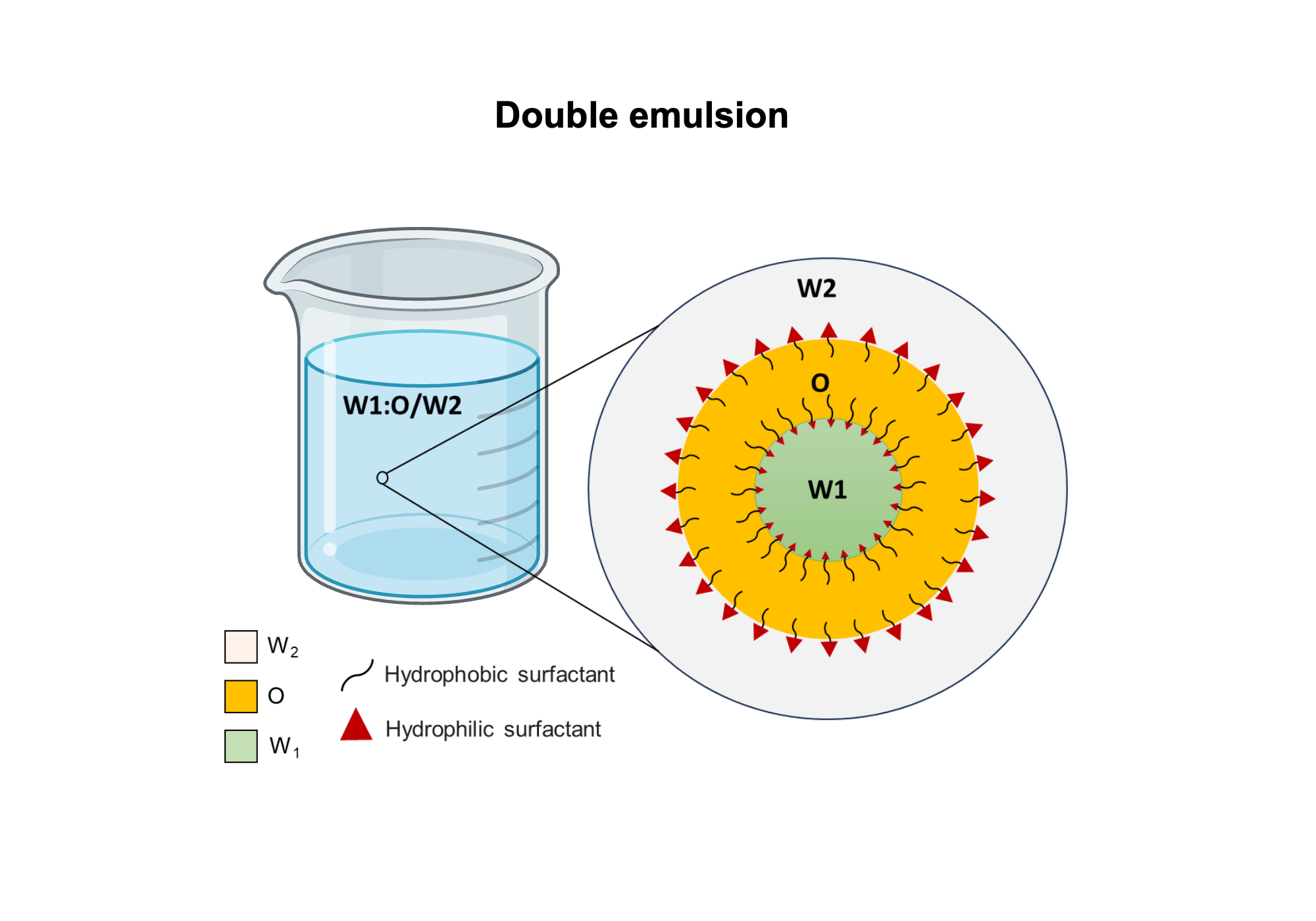
- Double/Triple Emulsions: Advanced processing now makes it easier to create water-in-oil-in-water or even triple (W/O/W/O) systems. These can encapsulate active botanicals for time-release. Innovative patents describe multilayer emulsions where each phase has a different function (e.g. one layer for UV filter, another for moisturizers).
- Biopolymer Networks: Inspired by biology, some new emulsions use biopolymers (e.g. hyaluronic acid or keratin) to form a network throughout the droplets, creating “semisolid” emulsions that resist separation and feel cushiony on skin.
Examples of Modern Cosmetic Emulsifiers
The choice of emulsifier has expanded considerably beyond the traditional systems used in classic creams and lotions. Ingredient suppliers now offer technologies designed for different formulation priorities, including natural-origin formulations, lighter textures, lamellar structures, improved sensory properties and more demanding emulsion systems.
Evonik offers several emulsifier systems under its TEGO® Care range. One example is TEGO® Care 450 MB, based on Polyglyceryl-3 Methylglucose Distearate. It is an O/W emulsifier designed for cosmetic emulsions and is particularly interesting where formulators need good compatibility with active ingredients and electrolytes. Another example is TEGO® Care PBS 6 MB, based on Polyglyceryl-6 Stearate and Polyglyceryl-6 Behenate, which is intended for fluid O/W emulsions and offers flexibility in processing. These examples demonstrate how modern emulsifier systems are increasingly designed around specific formulation requirements rather than simply producing a stable cream.
Lucas Meyer Cosmetics offers HELIOSFEEL™, a natural-origin sensory ingredient based on Hydrogenated Lecithin. It is particularly interesting for formulations where the emulsifier and the sensory profile need to work together. Lecithin-based systems can contribute to the formation of organized interfacial structures while also influencing the skin feel of the finished formulation. HELIOSFEEL™ therefore represents a different approach to formulation design: the ingredient is not selected only because it can stabilize an emulsion, but also because the resulting structure and sensory properties are important to the final product concept.
Seppic provides another useful example with MONTANOV™ 82, an O/W emulsifier composed of Cetearyl Alcohol and Coco-Glucoside. It is designed for a broad range of textures and is particularly interesting because it promotes liquid-crystal and lamellar structures within the emulsion. In this type of system, the emulsifier contributes not only to the stabilization of dispersed droplets but also to the organization of the continuous phase and, consequently, to the texture and sensory behaviour of the finished product.
These examples illustrate an important point for formulators: innovation in emulsification does not necessarily mean replacing established chemistry with an entirely new molecule. It can also come from combining known raw materials or using different interfacial structures to achieve a particular processing window, sensory profile, texture or compatibility profile.
The commercial name, therefore, is only the starting point. In professional formulation work, the more important questions are: What is the INCI composition? What type of emulsion does it support? Which oil phases are compatible with it? What processing conditions does it require? How does it behave in the presence of electrolytes, acids, actives and rheology modifiers? And what type of internal structure does it create in the finished product?
This is why an emulsifier should rarely be evaluated in isolation. A formulation may contain the correct emulsifier on paper and still fail because of the oil phase, processing conditions, electrolyte load, rheology system or interaction with other ingredients. Successful emulsion development is ultimately a matter of matching the emulsifier system to the entire formulation rather than selecting an ingredient from a list of “best” emulsifiers.
In the lab, formulators must stay informed of these innovations. A&T Formulation’s strength lies in integrating such new ingredients with proven ones, testing how a novel emulsifier performs (stability, skin feel) in real formulations, and solving compatibility challenges. For example, if a new natural emulsifier is sensitive to pH, A&T experts will adjust the formula’s pH or buffer system to ensure it works. This level of formulation insight goes beyond the basic theory and keeps products at the cutting edge.
Conclusion
Cosmetic emulsions are deceptively simple in concept but rich in science and craft. Achieving a smooth, stable cream or lotion requires understanding interfacial chemistry, selecting the right emulsifiers, and meticulously optimizing the formula. Key takeaways are that mechanical dispersion plus an appropriate emulsifier system produce the desired product form; that different emulsion types deliver different textures and functionalities; and that stability challenges – creaming, coalescence, ripening – must be anticipated and prevented through ingredient choice and formulation strategy. Recent advances (natural polymers, nanoparticle stabilizers, smart polymers) continue to expand what is possible.
Formulators (and consumers) benefit when product development is guided by both theory and practical testing. A&T Formulation’s expertise lies in this balance: leveraging known principles (e.g. HLB, surfactant synergy) and exploring new ingredients to create innovative skincare emulsions. By combining thorough understanding of emulsification with rigorous R&D, we ensure each lotion or cream meets its stability and sensory goals – all while offering the latest in cosmetic science.
References
- Leal-Calderón, F., Bibette, J., and Schmitt, V. Emulsion Science: Basic Principles, 2nd ed., Springer, 2007.
- Sjöblom, J. (Ed.). Encyclopedic Handbook of Emulsion Technology, 1st ed., Marcel Dekker, 2001.
- Ruckenstein, E. and Manciu, M. Nanodispersions: Interactions, Stability, and Dynamics, Springer, 2020.
- Cortes, N., Alves, I.A., and Aragón, D.M. “Innovative Emulsifiers in Cosmetic Products: A Patent Review (2013–2023)”. ACS Omega 9(50), 48884–48898 (2024).
- American Chemistry Council. Chemical Safety Facts: Cetyl Alcohol. (2022).
Kapcsolódó bejegyzések
How Much Does It Cost to Start a Skincare Brand in 2026?