Mineral vs Chemical Sunscreen: How Do UV Filters Really Work?

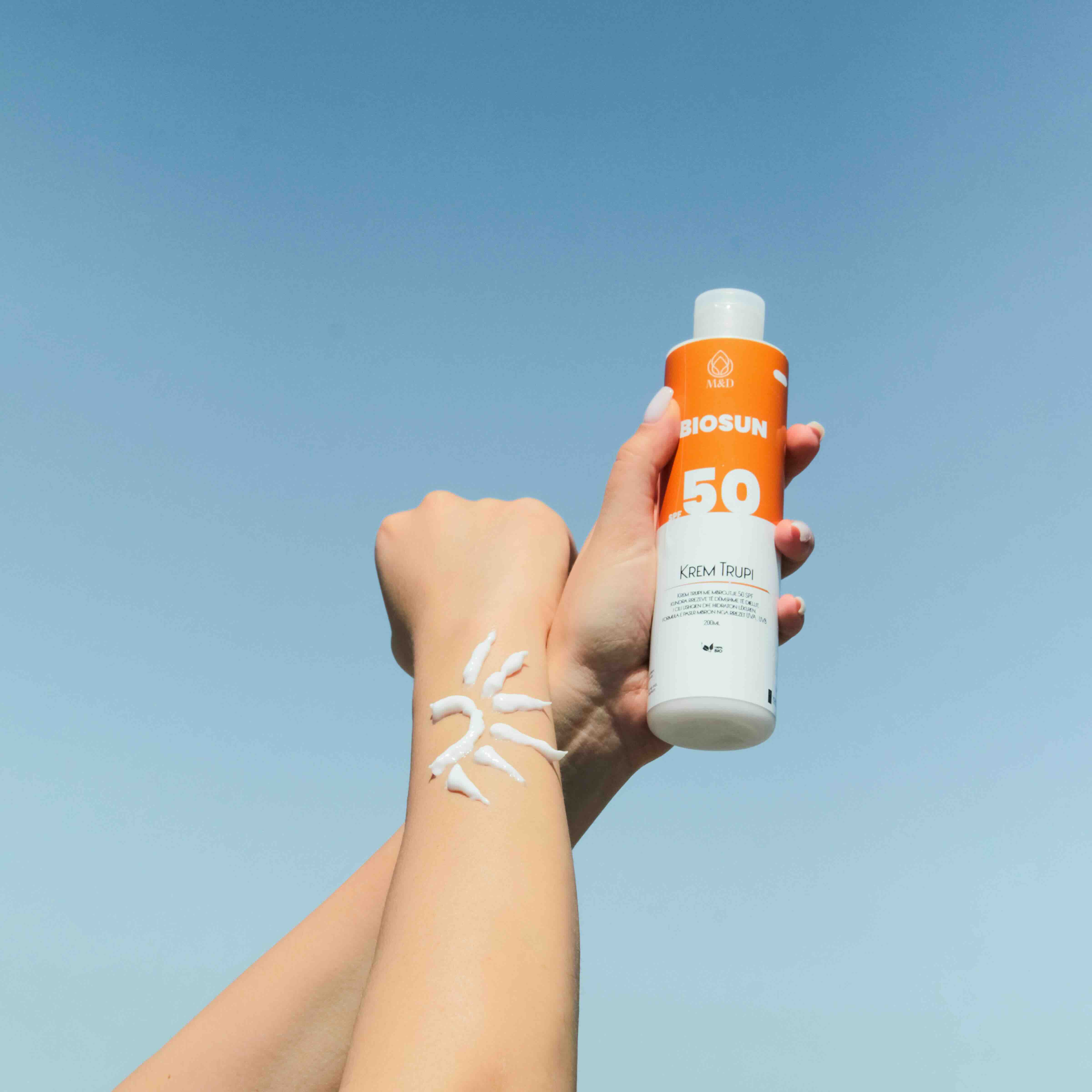
To understand the difference, it helps to first look at what sunscreen is actually trying to do.
Why do we need UV protection?
Ultraviolet radiation reaching the Earth's surface is generally divided into UVA and UVB radiation.
UVB is strongly associated with sunburn, while UVA penetrates further into the skin and is an important contributor to long-term photoaging. Sunscreen products are therefore designed to reduce the amount of UV radiation reaching and affecting the skin. (Handbook of Cosmetic Science and Technology, 2001, André O. Barel, Marc Paye and Howard I. Maibach, eds.)
This is why a sunscreen designed to provide broad protection needs to address more than one part of the UV spectrum.
What is the difference between mineral and chemical UV filters?
The traditional classification divides UV filters into organic and inorganic filters.
The terms “chemical sunscreen” and “mineral sunscreen” are commonly used by consumers, but the scientific distinction is more accurately described as organic versus inorganic UV filters.
Organic filters absorb UV radiation. When UV energy is absorbed, the filter molecule moves into an excited state and then releases the energy in a less harmful form.
Inorganic filters, particularly zinc oxide and titanium dioxide, can absorb UV radiation as well as scatter and reflect it. Their performance depends on factors such as particle size, dispersion within the formulation and the thickness of the film left on the skin. (Dermatologic, Cosmeceutic, and Cosmetic Development: Therapeutic and Novel Approaches, 2008, Kenneth A. Walters and Michael S. Roberts, eds.)
So the popular idea that mineral sunscreens simply “sit on the skin and reflect sunlight” is an oversimplification.
How do mineral sunscreens work?
The two best-known inorganic UV filters are:
- Zinc oxide
- Titanium dioxide
Their ability to protect the skin depends partly on their physical characteristics. Particle size, dispersion and the resulting film on the skin can all influence their UV-filtering performance.
Historically, mineral filters could leave a visible white film on the skin. Reducing the particle size can improve cosmetic appearance and make the product more transparent, although changing particle size can also affect the way the particles interact with UV radiation. (Dermatologic, Cosmeceutic, and Cosmetic Development: Therapeutic and Novel Approaches, 2008, Kenneth A. Walters and Michael S. Roberts, eds.)
This illustrates an important formulation challenge: improving one property of a sunscreen can sometimes influence another.
A formulator therefore has to balance protection with appearance, texture, stability and consumer acceptability.
How do chemical UV filters work?
Organic UV filters work primarily by absorbing UV radiation.
There are different filters designed to cover different parts of the UVA and UVB ranges. Some have predominantly UVA or UVB activity, while others provide broader coverage.
This is one reason why sunscreen formulations often contain combinations of UV filters rather than relying on a single ingredient.
Combining filters can help create broader protection across the UV spectrum and can also influence the overall stability and performance of the formulation. (Dermatologic, Cosmeceutic, and Cosmetic Development: Therapeutic and Novel Approaches, 2008, Kenneth A. Walters and Michael S. Roberts, eds.)
Which one is better?
There is no universal answer.
The performance of a sunscreen depends on the finished formulation, not simply on whether it contains mineral or organic filters.
A sunscreen needs to provide the intended level and spectrum of protection while also remaining stable, spreadable and pleasant enough that people will actually use it.
The formulation can influence how UV filters are distributed within the product and how they form the protective film on the skin.
This is particularly important because sunscreen protection depends on what happens after the product is applied, not simply on the theoretical properties of the individual UV filters.
Why does formulation matter so much in sunscreen?
Sunscreen is a particularly good example of the principle we discussed in our previous articles: the ingredient is only one part of the product.
A UV filter can be highly effective on its own, but the finished sunscreen still needs to be formulated correctly.
For example, some organic filters can be sensitive to UV radiation themselves. Formulators can therefore use combinations of filters or specific formulation approaches to improve photostability.
Research described in Dermatologic, Cosmeceutic, and Cosmetic Development discusses approaches including combinations of UV filters and encapsulation or other delivery technologies designed to improve the stability of less photostable filters. (Dermatologic, Cosmeceutic, and Cosmetic Development: Therapeutic and Novel Approaches, 2008, Kenneth A. Walters and Michael S. Roberts, eds.)
The same principle applies to mineral filters. Their particle size and dispersion within the emulsion can influence their optical behaviour and therefore their contribution to UV protection.
Legyen naprakész
Fedezze fel a tudás és az inspiráció világát - iratkozzon fel blogunkra, hogy exkluzív tartalmakat és izgalmas híreket kapjon a szépségipar világából!
What does SPF actually tell us?
SPF, or Sun Protection Factor, is primarily an indicator of protection against UV-induced erythema — in other words, the redness associated mainly with UVB exposure.
The basic SPF calculation compares the UV dose required to produce a minimal erythema response on protected skin with the dose required on unprotected skin under the test conditions. (Handbook of Cosmetic Science and Technology, 2001, André O. Barel, Marc Paye and Howard I. Maibach, eds.)
This is important because SPF should not be interpreted as a complete measurement of all UV protection.
A sunscreen can have a high SPF while still requiring appropriate UVA protection. Broad-spectrum protection therefore considers coverage across both UVA and UVB regions.
Does sunscreen need to penetrate the skin?
Interestingly, no.
Unlike many skincare products, a sunscreen is intended to provide its protective function primarily on or near the surface of the skin.
This also means that skin retention is an important characteristic. The literature discusses how the properties of the formulation and the UV filters influence their interaction with the stratum corneum and their resistance to removal.
Some highly lipophilic filters have a strong affinity for the outer layers of the skin, which can contribute to their persistence after application. (Dermatologic, Cosmeceutic, and Cosmetic Development: Therapeutic and Novel Approaches, 2008, Kenneth A. Walters and Michael S. Roberts, eds.)
This is another example of why maximum penetration is not necessarily the goal in cosmetic formulation. For sunscreen, the desired outcome is effective protection at the skin surface.
How is sunscreen performance tested?
A sunscreen cannot be judged by its ingredient list alone.
The finished product needs to be evaluated using appropriate testing methods.
SPF testing provides information about protection against erythema, while additional methods are needed to assess UVA protection and other characteristics of the product.
Stability is also particularly important. If a UV filter crystallises during storage, for example, the distribution of the filter within the formulation can change and the product may no longer provide the intended level of protection. Cosmetic Formulation: Principles and Practice specifically highlights crystallisation as a serious stability issue in sunscreen emulsions. (Cosmetic Formulation: Principles and Practice, 2019, Heather A. E. Benson, Michael S. Roberts, Vânia Rodrigues Leite-Silva and Kenneth A. Walters, eds.)
This is why sunscreen development requires particularly careful attention to formulation, stability and efficacy testing.
So, mineral or chemical?
Rather than asking which category is automatically better, it is more useful to ask:
Which UV filters and formulation system are appropriate for this particular product?
A mineral sunscreen may be the right choice for one concept, while a combination of organic filters may be more suitable for another. In some formulations, combinations of different filter types can be used to achieve the desired spectrum, stability and cosmetic properties.
The final product needs to balance several factors at once:
- UV protection
- UVA/UVB coverage
- photostability
- skin compatibility
- texture and appearance
- water resistance, where relevant
- stability during storage
- consumer acceptability.
That balance is what makes sunscreen formulation particularly demanding.
The key takeaway
Mineral and chemical sunscreens work differently, but neither category can simply be labelled “better” in every situation.
Mineral filters such as zinc oxide and titanium dioxide can absorb, scatter and reflect UV radiation, while organic filters primarily absorb UV radiation. The choice of filters, their combination and the formulation surrounding them all influence the performance of the finished product.
For a sunscreen, the real question is therefore not simply “Which filter is best?”
It is:
“How can the filters be formulated into a stable, effective and pleasant product that provides the intended protection?”
That is where cosmetic formulation expertise becomes particularly important.
Kapcsolódó bejegyzések
Cosmetic Emulsions: Formulation, Common Emulsifiers & Stability Insights