How Are Cosmetic Creams Formulated? Emulsions, Emulsifiers and Stability Explained

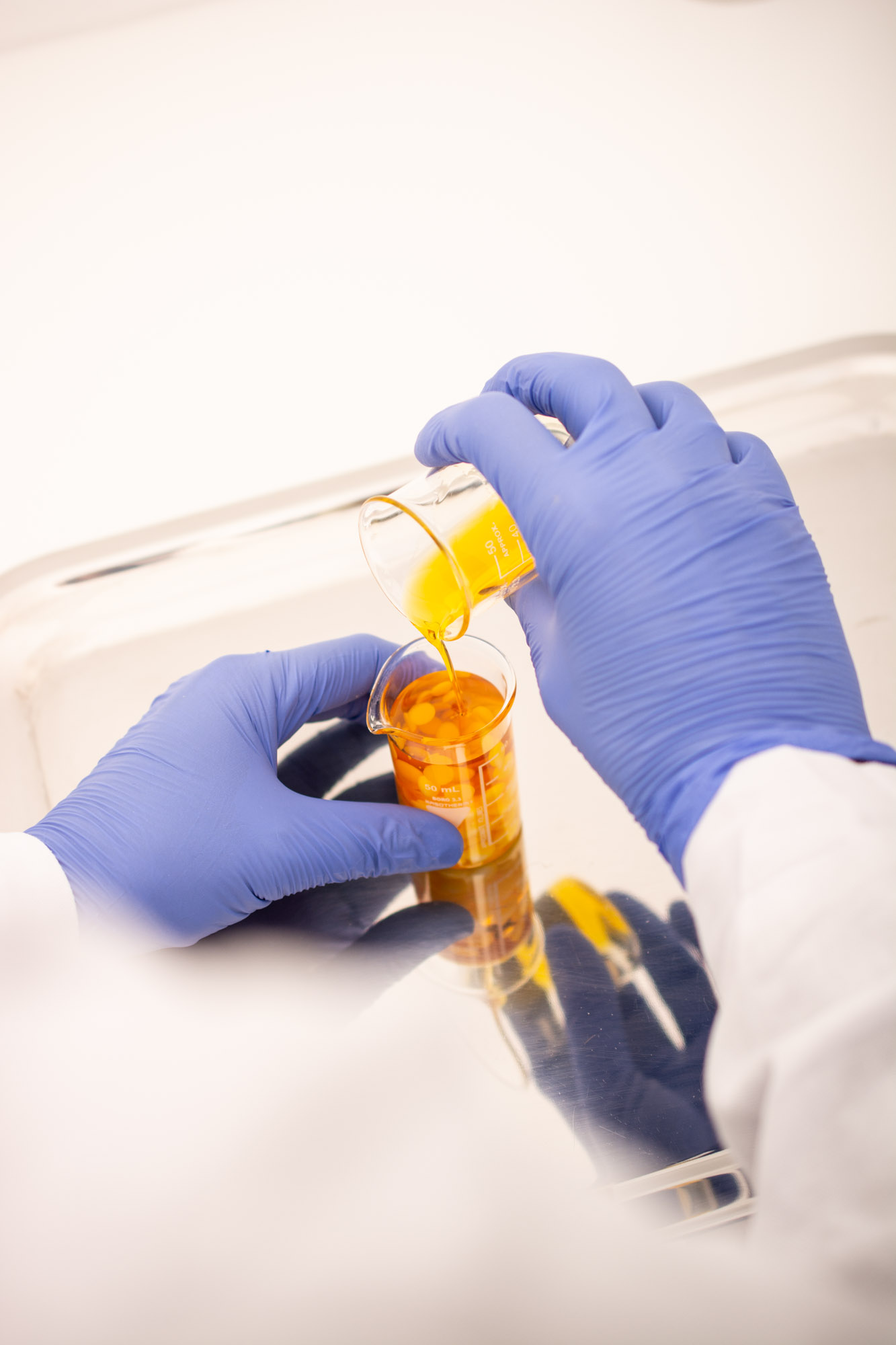
A typical cream may contain water, oils, emulsifiers, moisturising ingredients, thickeners, preservatives, active ingredients and many other components. The challenge is not simply putting them into the same container. Some of these ingredients naturally want to separate from each other.
So how does a formulator turn oil and water into a stable, pleasant cream?
The answer is emulsion technology.
What is a cosmetic emulsion?
An emulsion is a system in which one liquid is dispersed as small droplets throughout another liquid that it would normally not mix with.
The two most common types used in skincare are:
Oil-in-water (O/W) – small oil droplets are dispersed in a continuous water phase.
Water-in-oil (W/O) – small water droplets are dispersed in a continuous oil phase.
O/W emulsions are widely used for creams and lotions because they can provide a lighter, more easily spreadable skin feel. W/O systems can provide a richer, more occlusive experience and can be useful when a more protective formulation is desired. (Handbook of Cosmetic Science and Technology, 2001, André O. Barel, Marc Paye and Howard I. Maibach, eds.)
The choice between them is not simply a question of texture. It can also affect the way ingredients are incorporated, how the product feels on the skin and how the formulation behaves during storage.
Why don't oil and water simply mix?
This is the basic problem a formulator has to solve.
Oil and water have very different chemical properties, so when they are mixed together they naturally tend to separate again.
An emulsifier helps overcome this problem.
Emulsifiers contain parts that have an affinity for water and parts that have an affinity for oil. They can therefore position themselves at the boundary between the two phases and help create a more stable system.
In an emulsion, the oil is broken into many small droplets and surrounded by an interfacial layer. The emulsifier helps prevent these droplets from coming together and forming larger droplets that eventually separate from the water phase. (Cosmetic Formulation: Principles and Practice, 2019, Heather A. E. Benson, Michael S. Roberts, Vânia Rodrigues Leite-Silva and Kenneth A. Walters, eds.)
This is one of the key pieces of formulation science behind a cream.
What is HLB and why does it matter?
If you have ever looked at an emulsifier specification, you may have come across the term HLB, or hydrophilic-lipophilic balance.
It is a useful way of thinking about the balance between the water-loving and oil-loving characteristics of an emulsifier.
In broad terms, emulsifiers with different HLB characteristics are suited to different types of emulsification. The oil phase also has its own requirements, so the formulator needs to consider the relationship between the emulsifier and the oils being used.
HLB is a useful starting point, but it is not a magic formula that guarantees a stable cream. The complete formulation still needs to be considered, including the oil phase, other emulsifiers, thickeners, pH and processing conditions. (Handbook of Cosmetic Science and Technology, 2001, André O. Barel, Marc Paye and Howard I. Maibach, eds.)
This is why selecting an emulsifier is a formulation decision rather than simply choosing an ingredient from a supplier catalogue.
What else goes into a cream?
An emulsifier alone does not make a finished skincare product.
Depending on what the product is intended to do, a cream may also contain:
- emollients, which influence softness, spreading and skin feel;
- humectants, such as glycerin or urea, which support skin hydration;
- thickeners, which help create the desired consistency;
- active ingredients, such as vitamins, peptides or UV filters;
- preservatives, which help protect the product against microbial growth;
- and other ingredients needed for stability, appearance or sensory performance. (Handbook of Cosmetic Science and Technology, 2001, André O. Barel, Marc Paye and Howard I. Maibach, eds.)
The interesting part is that these ingredients do not always behave independently.
Changing one component can affect the texture, stability, pH or performance of the whole formula.
Why can a cream separate?
An emulsion can become unstable in several ways.
You might notice:
- a watery layer appearing,
- oil collecting on the surface,
- changes in viscosity,
- lumps or changes in texture,
- or, in severe cases, complete separation into oil and water.
Some forms of instability, such as flocculation and creaming, involve droplets coming together or moving within the system without necessarily merging. Coalescence is more serious because individual droplets combine into larger droplets and can eventually lead to the emulsion breaking.
Temperature, viscosity, the volume ratio of the phases and the structure of the interfacial film can all influence stability. (Cosmetic Formulation: Principles and Practice, 2019, Heather A. E. Benson, Michael S. Roberts, Vânia Rodrigues Leite-Silva and Kenneth A. Walters, eds.)
This is why a cream that looks perfect immediately after manufacturing may still require extensive stability testing.
Legyen naprakész
Fedezze fel a tudás és az inspiráció világát - iratkozzon fel blogunkra, hogy exkluzív tartalmakat és izgalmas híreket kapjon a szépségipar világából!
Why does the manufacturing process matter?
It is not enough to know what ingredients are in the formula.
How the cream is manufactured can affect the final product as well.
The amount of shear applied during mixing, the order in which ingredients are added, heating and cooling rates, and the equipment used can all influence the structure of an emulsion.
This becomes particularly important when moving from laboratory batches to commercial production. A formula that works perfectly in a small laboratory vessel may behave differently when manufactured in a much larger tank because the mixing and heat-transfer conditions change.
The Handbook of Cosmetic Science and Technology specifically notes that the manufacturing process can have a significant effect on emulsion stability and recommends evaluating the product under actual production conditions. (Handbook of Cosmetic Science and Technology, 2001, André O. Barel, Marc Paye and Howard I. Maibach, eds.)
This is one of the reasons scale-up is an important stage of professional cosmetic development.
Why does the cream feel different on the skin?
Stability is only part of the job.
A cream also needs to provide the right sensory experience.
Should it feel rich or lightweight? Should it spread immediately or leave a protective film? Should it absorb quickly? Should it work well underneath makeup?
These decisions influence the formulation.
For example, increasing the amount of oil may create a richer product, but it can also change the spreading properties and after-feel. Increasing the amount of a thickener can produce a more substantial texture, but some polymers may also introduce stickiness.
The formulation therefore has to balance stability, performance and sensory properties rather than optimising only one of them. (Handbook of Cosmetic Science and Technology, 2001, André O. Barel, Marc Paye and Howard I. Maibach, eds.)
There is no universal “best” cream formula
This may be the most important point.
There is no single emulsifier, oil phase or cream base that is ideal for every skincare product.
A lightweight facial moisturizer, a rich night cream, a body lotion and an SPF product have very different requirements.
The formulator needs to start with the product concept: who will use it, where it will be applied, what it should feel like, which ingredients it needs to contain and what performance is expected.
Only then can the appropriate formulation system be selected. (Handbook of Cosmetic Science and Technology, 2001, André O. Barel, Marc Paye and Howard I. Maibach, eds.)
This is what makes cosmetic formulation more than simply following a recipe.
From laboratory cream to finished product
A cream is not finished when the first laboratory sample looks good.
The formula needs to be evaluated for stability, compatibility, sensory properties and, where relevant, its intended cosmetic performance.
The packaging also needs to be considered. Changes in packaging materials can affect product stability, particularly through factors such as oxygen permeability, temperature resistance or interactions between the packaging and the formula. (Handbook of Cosmetic Science and Technology, 2001, André O. Barel, Marc Paye and Howard I. Maibach, eds.)
The final product therefore represents the combination of formula + manufacturing process + packaging.
The key takeaway
A cosmetic cream may look simple, but behind that smooth texture is a carefully balanced system.
Oil and water need to be brought together and kept stable. The emulsifier has to work with the chosen oils and other ingredients. The formulation needs to remain stable during manufacturing and storage, while also delivering the texture and skin feel expected by the consumer.
There is no universal cream formula. The right formulation depends on the product, the ingredients, the intended use and the experience the brand wants to create.
That is why professional formulation development is not about finding a recipe that works once. It is about designing a formula that continues to work as a finished product.
Kapcsolódó bejegyzések
Cosmetic Emulsions: Formulation, Common Emulsifiers & Stability Insights