HLB Value in Cosmetic Formulation: Why This Number Matters When Developing a Stable Cream

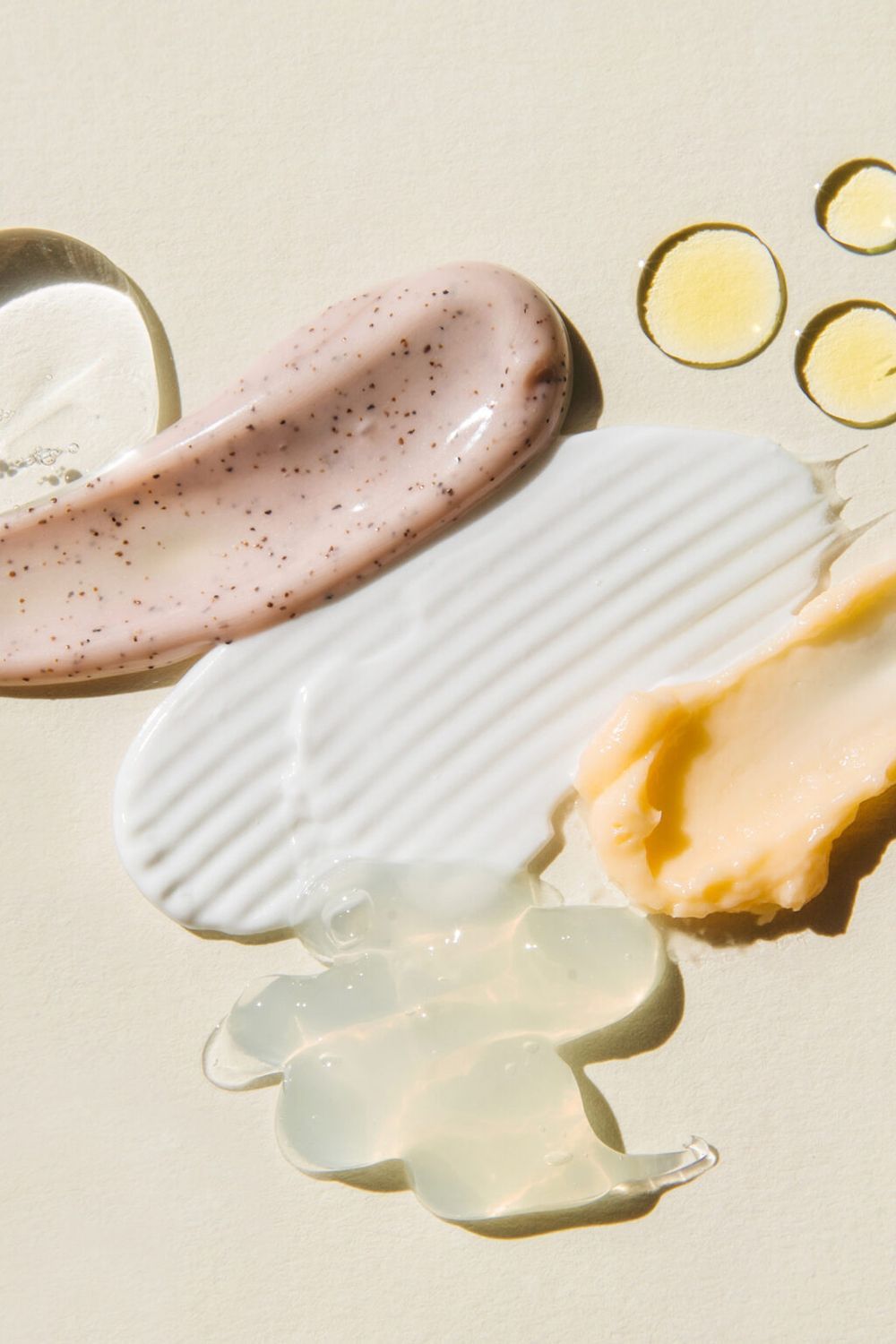
When developing a cosmetic cream, one of the most basic formulation challenges is also one of the most important: how do you keep oil and water together?
Oil and water naturally separate. To create a stable cream or lotion, the two phases need to be combined into an emulsion, usually with the help of an emulsifier system.
This is where the HLB value, or Hydrophilic-Lipophilic Balance, becomes useful.
HLB is a traditional formulation tool that helps cosmetic formulators select suitable emulsifiers and develop oil-in-water or water-in-oil emulsions. It does not provide a complete formulation by itself, but it can be a valuable starting point when designing an emulsion.
What Does HLB Actually Mean?
An emulsifier contains both water-loving and oil-loving characteristics.
The hydrophilic part has an affinity for water, while the lipophilic part has an affinity for oils. The balance between these properties influences how the emulsifier behaves at the interface between the oil and water phases.
The HLB system expresses this balance as a numerical value.
In simple terms:
- Lower HLB values indicate a more lipophilic character.
- Higher HLB values indicate a more hydrophilic character.
This helps the formulator understand which type of emulsifier may be appropriate for a particular formulation.
Why Is HLB Important in Cosmetic Formulation?
Not every emulsifier works equally well with every oil.
A cream containing mineral oil may require a different emulsifier system from one containing vegetable oils, esters or other emollients.
This is where the concept of required HLB becomes important.
The required HLB describes the approximate HLB value needed to effectively emulsify a particular oil or oil phase.
So, when developing an emulsion, there are essentially two things to consider:
The emulsifier has an HLB value.
The oil phase has a required HLB.
The formulator can then use this information as a starting point when selecting the emulsifier system.
O/W vs. W/O Emulsions
HLB can also help when deciding what type of emulsion to develop.
An oil-in-water (O/W) emulsion contains oil droplets dispersed throughout a continuous water phase. More hydrophilic emulsifiers are generally associated with this type of system.
A water-in-oil (W/O) emulsion contains water droplets dispersed throughout a continuous oil phase. More lipophilic emulsifiers are generally used for these systems.
As a general guideline, HLB values around 8–18 are commonly associated with O/W emulsifiers, while values around 4–6 are associated with W/O emulsifiers.
These ranges are useful as a starting point, but they should not be treated as strict rules. The actual behaviour of an emulsion depends on the complete formulation.
Why Do Formulators Combine Emulsifiers?
A cosmetic formulation does not necessarily need to rely on a single emulsifier.
In practice, combinations of emulsifiers are frequently used.
By combining emulsifiers with different HLB values in specific proportions, a formulator can create an emulsifier blend with an intermediate HLB.
For example, an emulsifier with an HLB of 6 and another with an HLB of 14 can be combined to create a blend with a target value somewhere between the two.
The same principle can be applied to an oil phase containing several different emollients.
This gives the formulator much more flexibility when developing a cream or lotion.
What Is the Required HLB of an Oil Phase?
This becomes particularly interesting when an oil phase contains several ingredients.
Imagine that a cream contains three different emollients. Each one may have a different required HLB.
The required HLB of the complete oil phase can be estimated by considering the proportion of each oil in the formulation.
In simplified form:
Required HLB = Σ (fraction of each oil × required HLB of that oil)
This calculation gives the formulator a target around which an emulsifier system can initially be designed.
It is particularly useful during the early stages of formulation development, when several possible emulsifier systems may need to be compared.
Legyen naprakész
Fedezze fel a tudás és az inspiráció világát - iratkozzon fel blogunkra, hogy exkluzív tartalmakat és izgalmas híreket kapjon a szépségipar világából!
Does the Right HLB Guarantee a Stable Cream?
No.
This is one of the most important things to understand about the HLB system.
Matching the HLB of an emulsifier system to the required HLB of an oil phase does not automatically produce the most stable emulsion.
There are many other factors involved.
The stability and characteristics of a cosmetic emulsion can be influenced by:
- oil phase composition;
- emulsifier concentration;
- emulsifier combination;
- droplet size;
- viscosity;
- homogenisation;
- processing conditions;
- pH;
- electrolytes;
- co-emulsifiers;
- and the structure formed at the oil-water interface.
This is why two formulations with similar HLB values can still behave very differently.
The HLB system should therefore be seen as a formulation tool rather than a guaranteed recipe for stability.
HLB Is a Starting Point, Not the Finished Formula
This is perhaps the best way to understand the role of HLB in modern cosmetic formulation.
A formulator can use HLB to narrow down the possible emulsifier systems and establish a sensible starting point.
The next step is practical formulation and testing.
Different emulsifiers, concentrations and combinations may need to be tested to determine which system produces the desired combination of:
- stability;
- texture;
- viscosity;
- appearance;
- sensory properties;
- and overall product performance.
If reliable required-HLB information is not available for an oil phase, experimental testing can also be used to identify which emulsifier system performs best.
This is an important reminder that cosmetic formulation is not simply a matter of calculating the right number.
The calculation provides direction. Laboratory development provides the answer.
Is HLB Still Relevant in Modern Cosmetic Formulation?
Yes, although it is not the only approach available to formulators.
Modern cosmetic science also includes polymeric emulsifiers, lamellar systems and other advanced emulsification technologies.
Some of these systems do not fit neatly into the traditional HLB model.
This does not make HLB irrelevant. Instead, it highlights the fact that HLB is one of several tools available when developing a modern cosmetic formulation.
For many conventional emulsions, however, it remains a useful way to understand the relationship between an emulsifier and the oil phase.
The Bottom Line
The HLB value helps formulators understand the hydrophilic and lipophilic character of an emulsifier and provides a useful starting point for selecting an emulsifier system.
The concept of required HLB takes this a step further by considering the characteristics of the oil phase that needs to be emulsified.
But a stable, elegant cosmetic cream requires much more than matching two numbers.
The emulsifier system, oil phase, processing conditions, droplet structure, viscosity, pH and other ingredients all need to work together.
HLB helps point the way. The formulation process determines whether you actually arrive at a stable, effective and pleasant product.
References
- Benson, H. A. E., Roberts, M. S., Leite-Silva, V. R., & Walters, K. A. (Eds.). (2019). Cosmetic Formulation: Principles and Practice.
- Barel, A. O., Paye, M., & Maibach, H. I. (Eds.). (2009). Handbook of Cosmetic Science and Technology.
- Barel, A. O., Paye, M., & Maibach, H. I. (Eds.). (2005). Delivery System Handbook for Personal Care and Cosmetic Products: Technology, Applications, and Formulations.
Kapcsolódó bejegyzések
Cosmetic Emulsions: Formulation, Common Emulsifiers & Stability Insights